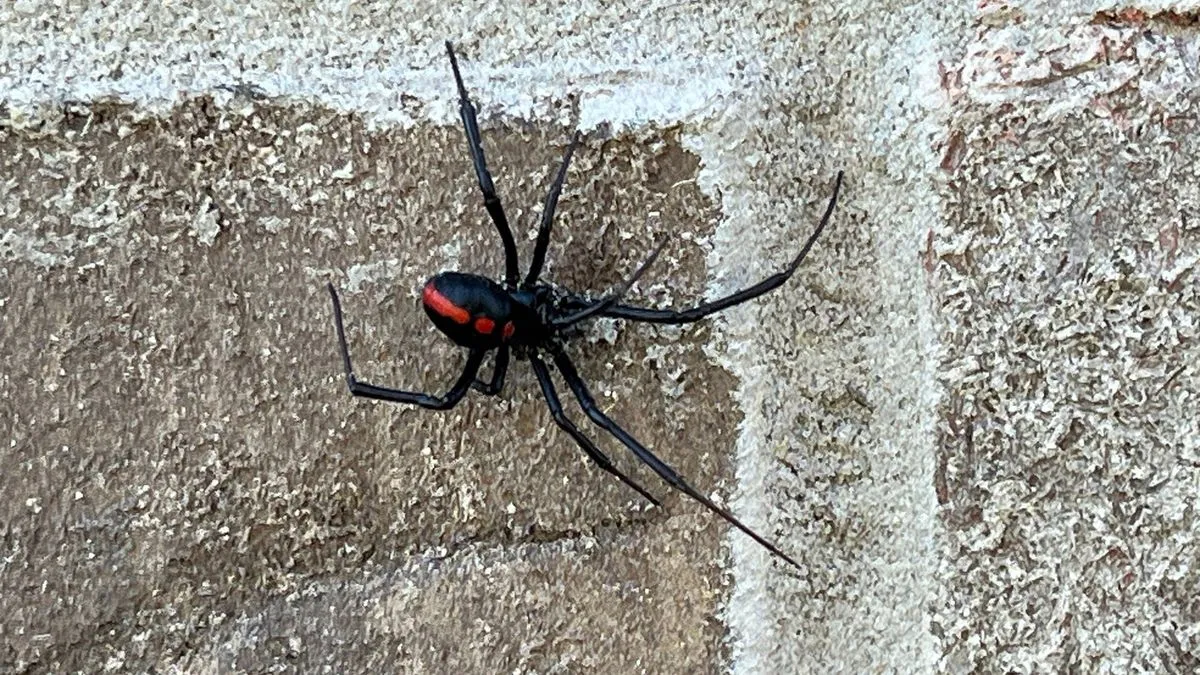
Noticing a black widow inside the house probably means there aren't many inside, but a few may be nearby. A lone widow is usually a female who settled into a quiet corner of the garage, and a second one means you have a real nesting spot nearby. You can find out which situation you're in with a flashlight and about an hour, which beats lying awake guessing. Spiders follow food, shelter, and open gaps, not scents or clean floors, something I covered in what really brings spiders into a house.
Confirm It's Actually a Widow First
Before you start tearing the garage apart, make sure of what you saw. An adult female is shiny black with a round abdomen and a red hourglass underneath, and her body with legs spans about an inch and a half. The hourglass can be orange, split in two, or missing on juveniles. Washington State University Extension notes that males and young spiders are striped with white and yellow, so a skinny, banded spider is rarely the dangerous one. Brown widows, common across the South, are lighter and mottled, but they belong to the same family, and I'd treat them the same way.
Take a phone photo before you move anything. If you're unsure, an extension office can identify a spider from a clear picture.
Does One Widow Mean More?
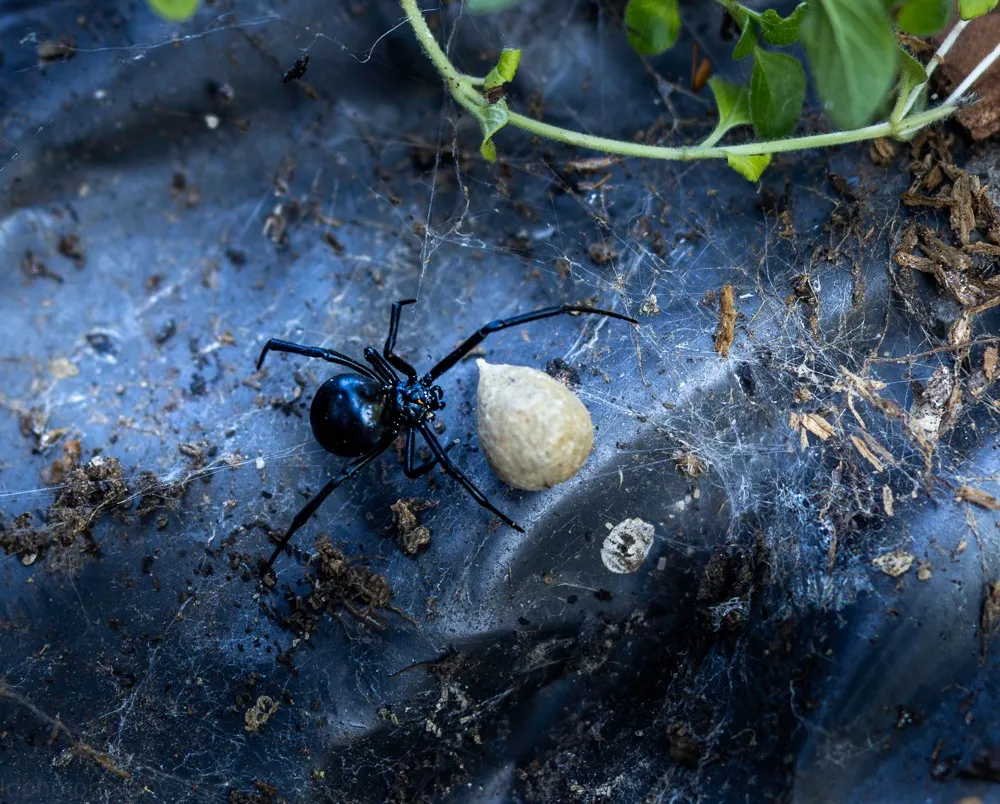
Not automatically. Alabama Extension reports that a single egg sac holds roughly 255 eggs, which sounds alarming, but spiderlings disperse widely, and most don't survive. A female can make several sacs, though, and the young take 26 to 30 days to emerge.
Here's the rule I use. One adult, no sac, and no second web most likely means you found a wanderer. An egg sac, a second web, or two adults means something has been living there for a while. Egg sacs are tan, papery, and about the size of a marble, usually hanging in the web. They're tough, so that a quick swipe won't pop one.
Where to Look, and When?
Widows are nocturnal, so I check after dark with a flashlight, gloves, and long sleeves. The web gives them away. It's a messy, tangled mess low to the ground, and the threads are strong enough to feel springy and snap when you break them.
WSU lists firewood, old lumber, dry crawl spaces, outbuildings, and rock piles as favorite spots. In houses, I check these first:
- Garage corners and behind stored boxes.
- Under shelves, workbenches, and the lip of the garage door track.
- Crawl space vents and basement window wells.
- The underside of patio furniture and grill covers.
- Shoes, gardening gloves, and flowerpots left outside.
I didn't find this in any guide: shine the light from the side, not straight on. A web lit head-on disappears, but a web lit sideways shows every strand. If you can't find it after an hour of searching, that is real information, and it's a good sign.
How to Remove Them Safely?
I use a vacuum with a hose attachment. It gets the spider, the web, and any sacs without putting my hand near them. Tie off the bag right away and put it in an outside trash can, because a widow can survive in there for a while. The drawback is reach: a spider tucked deep in a crack can retreat, and a vacuum won't pull a sac out of a tight seam. For those, I use a jar and a stiff piece of cardboard, wearing gloves.
I wouldn't lean on household sprays, which is why I never recommend them. A cleaner only works on a spider it directly coats, and as I explained in my post on whether Lysol kills spiders on contact, it can take hours. Windex has the same slow timeline; I covered how long Windex takes to kill a spider. A bitten hand during those hours is a bad trade. Cleaner doesn't touch sacs either.
What Didn't Work?
I tried the easy fixes so you don't have to. Spraying the perimeter bought me about a week of quiet before new webs appeared, which matches WSU's statement that pesticides are only a temporary fix unless you block entry. Scented sprays did nothing, which fits what I found in why spiders don't smell Lysol the way people assume. If you still want to weigh the DIY spray route, I laid out the pros and cons of using Windex on spiders, and the short version is that it's a last resort, not a plan.
Stop the Next One From Moving In
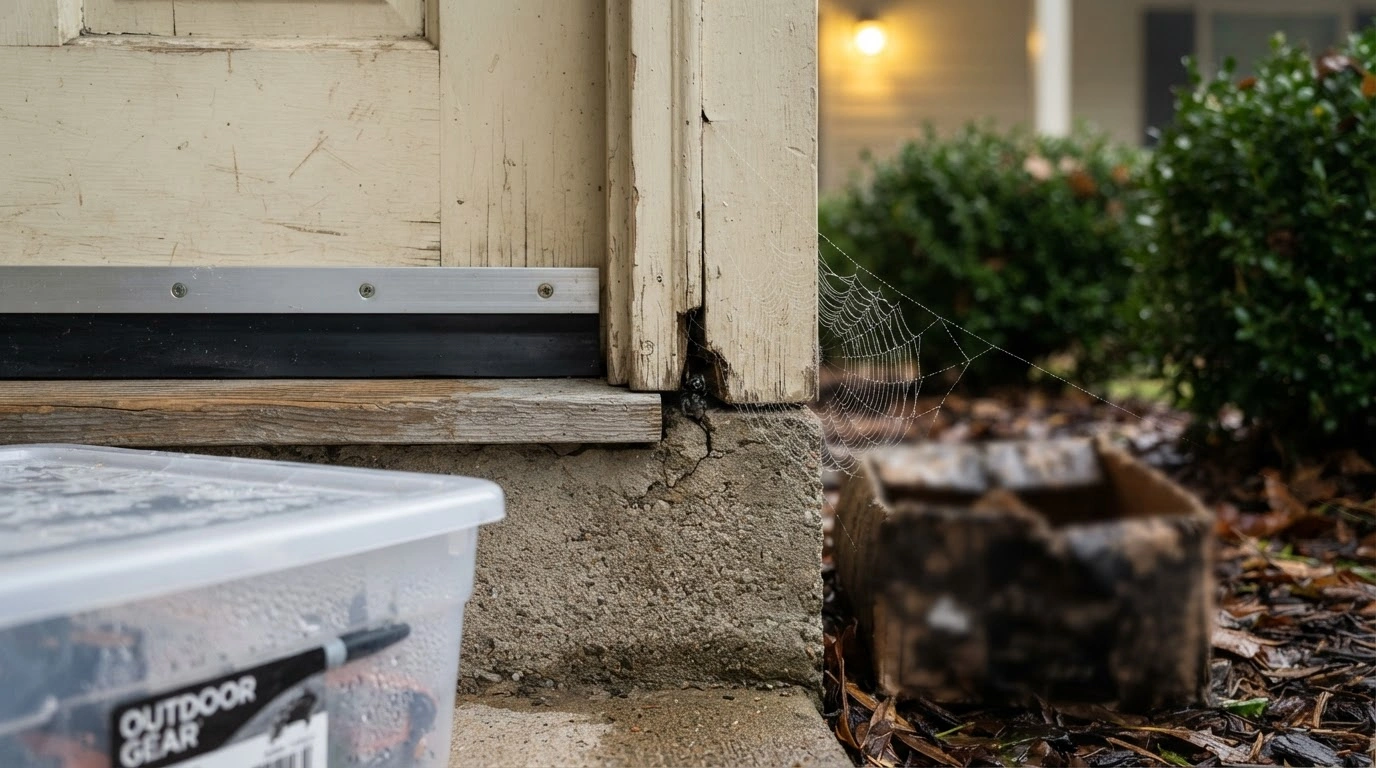
Prevention is dull work, and it's the only part that lasts:
- Move firewood off the wall and handle it with gloves, since WSU points out many spiders arrive on it.
- Replace worn door sweeps and patch torn screens, because widows follow insects through the same gaps.
- Swap cardboard storage for sealed plastic bins to reduce dark folds.
- Cut back shrubs touching the siding and clear leaf litter near the foundation.
- Move bright bulbs away from the door, or switch to yellow ones, so flying insects stop gathering there.
Then recheck the problem areas every two weeks for a month. Widows rebuild in the same spot, so a new web there indicates that the route is still open.
When to Call a Professional?
I'd call someone if you find more than two adults in a week, a sac comes back after you've cleared the area, or the nest is somewhere you can't reach, like a crawl space. It also makes sense in a home with toddlers or pets that dig in the garage. A technician can find the insect supply feeding them and treat crevices you can't see. I covered what that visit usually involves and whether professional pest control works for spiders.
If Someone Gets Bitten
Wash the area with soap and water, apply a cold pack with a cloth between, and call Poison Control at 1-800-222-1222. MedlinePlus recommends calling right away, since black widow venom affects the nervous system and causes muscle pain that spreads. Children and older adults are at the most risk. Deaths are rare today, but don't wait to see how it feels.