Every October I get the same message from readers: where did all these spiders come from? Overnight, a big one appears in the bathtub, and another crosses the hallway at 2 a.m. The usual answer is that they're escaping the cold. However, that answer is mostly wrong. Spiders can be seen because it’s mating season for them or there are enough insects for them to eat. Below is what's actually going on: a calendar of when it peaks and fades, and what I do at each stage.
They Aren't Really Fleeing the Cold
The most useful source I've found on this is the Burke Museum's spider myths page, written by the University of Washington's arachnology team. Their point is that the spiders in your living room are usually a different species from the ones in your garden. House spiders are a small group adapted to indoor life, and they tend to spend their whole life cycle inside one building. The Burke team estimates that fewer than 5% of the spiders you see indoors have ever been outside. Outdoor spiders also aren't bothered by cold the way we are. They go dormant, and most temperate species carry enough natural antifreeze to get through a freeze.
So why the sudden surge? Timing. Many house spiders reach maturity in late summer, and the males leave their hiding spots to look for females. You're not watching an invasion. You're watching residents you rarely see who have now started roaming.
I don't think the warmth story is entirely baseless, though, and this is where I'll disagree with the museum a little. Oregon State Extension describes wolf spiders as a common fall household pest looking for a place to overwinter, and Iowa State Extension notes that outdoor "invaders" usually don't live long indoors and can't reproduce there. My read is that it's both: mostly resident males on the move, plus a smaller group of outdoor wanderers that took a wrong turn near an open door.
Who You're Actually Seeing?
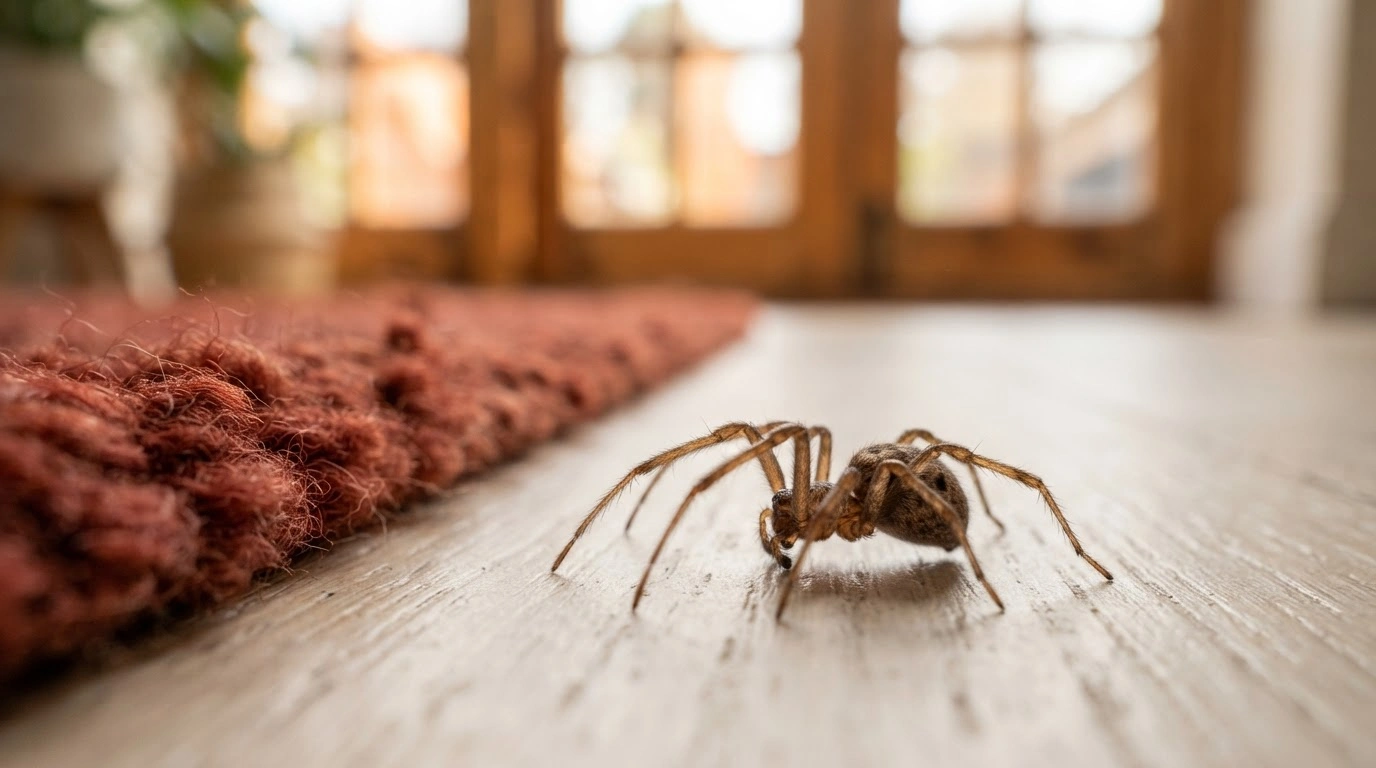
It's mostly males, often the biggest spiders you'll see all year. Females stay hidden in crawl spaces, wall voids, and behind appliances. Males wander, are hard to see, and get trapped. That's why so many end up in the bathtub: they can't climb the slick sides and get stuck.
Species vary by region. Across many parts of the country, expect giant house spiders, wolf spiders, and cellar spiders (the long-legged ones in basement corners). Utah State University Extension also lists hobo spiders as common indoors in fall across the Mountain West and notes that cellar spiders are harmless despite resembling recluses.
The Fall Spider Calendar
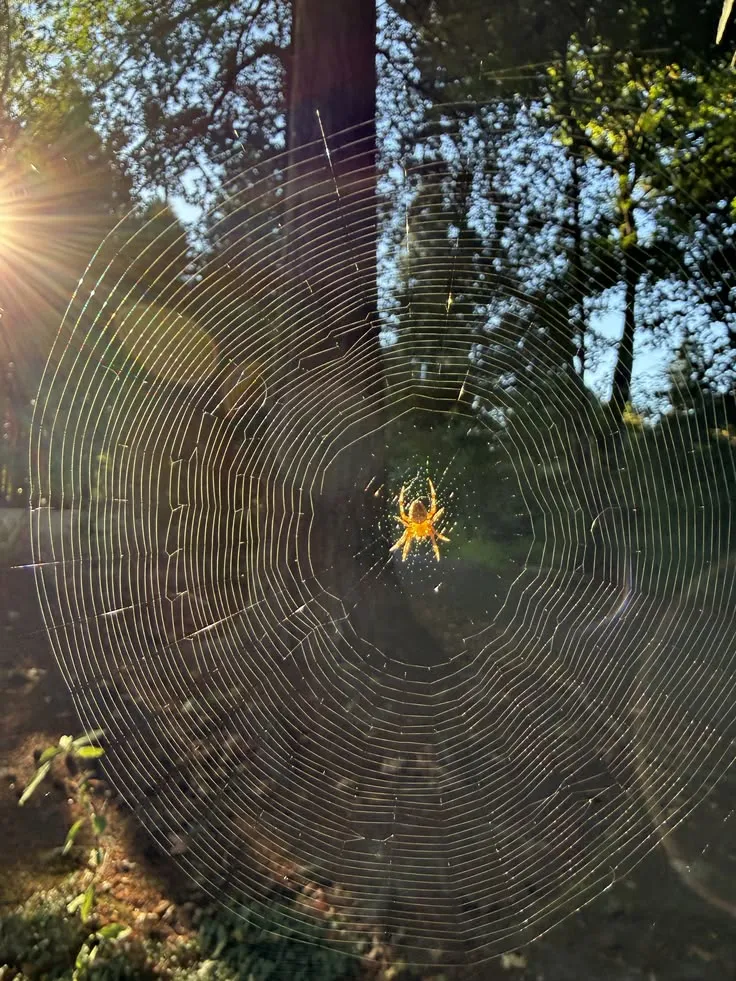
Dates shift with your climate. In the Gulf South and Florida, a warm October can push the peak later by a couple of weeks, while northern states often see it fade sooner. Treat these as ranges, not deadlines.
| Window | What's happening | What you'll notice |
| Mid-August to early September | House spider males reach maturity and leave their webs | First roaming spiders, usually at night in basements, garages, and ground floors |
| Mid-September to mid-October | Peak mating activity | The most sightings of the year: hallways, tubs, ceiling corners, and wolf spiders near doors |
| Late October to November | Males die off, females lay egg sacs, outdoor spiders look for winter shelter | Fewer large spiders, egg sacs tucked behind furniture, outdoor orb webs gone after the first frost |
| December to February | Outdoor spiders go dormant, indoor residents stay quiet | An occasional cellar spider and very few sightings |
| March to May | Spiderlings hatch | Tiny spiders and fresh webs in corners |
Most sources put the peak surge at roughly six to eight weeks. Last fall I kept a tally on a sticky note by my garage door. I counted 14 spiders between September 10 and October 22, and 11 of them showed up in the first three weeks. The last week had just two. That drop-off is why I tell readers not to panic buy anything in late October.
What I Do at Each Stage?
In late summer, before the surge. This is the time to act. Walk around the outside of the house at dusk and look for gaps under doors, torn screens, and loose utility-line seals. SDSU Extension also suggests clearing leaf litter from gutters and keeping shrubs and firewood off the siding, since those give spiders shelter and a bridge to your walls.
During the peak. Expect to see spiders, and decide in advance what you'll do about them. I use a cup and a piece of cardstock for the big ones and a vacuum for the rest, which also picks up webs and egg sacs. Don't bother with scent tricks. I tested one popular idea and wrote it up in Does Cinnamon Attract Spiders, and found that food, shelter, and open gaps matter far more than smell. The same goes for the cleaner aisle: spiders don't really smell Lysol the way people assume, so wiping a threshold with it won't keep anything out.
Suppose you want to spray something. Know what you're signing up for. A spider that gets directly coated can die, but slowly. I covered how long Windex takes to kill a spider and the pros and cons of using Windex on spiders in separate posts, and both come back to the same point: it only handles the one you can see. The same limits apply to whether Lysol kills spiders on contact.
After the peak, late October to November is when I check behind furniture and in closets for egg sacs, since removing them now means fewer spiderlings in spring. If you're still seeing steady numbers after the calendar says the surge should be over, that usually means a food supply or a persistent entry point. That's when professional spider pest control is worth the cost, because a technician can find the insect problem feeding them.
What Didn't Work for Me?
Two things disappointed me. First, I caulked the garage door corners early one September and still found two wolf spiders inside the following week. They had already been in the garage, so sealing didn't help. Sealing only works if you vacuum the strays out first. Second, I put sticky traps along the hallway and caught mostly the males I'd have caught by hand anyway, plus one very unhappy cellar spider. Traps guide you where traffic is heavy, but they don't solve anything.