Most of my spider articles circle the same question: you sprayed one, swept another, and a third showed up on the ceiling. However, the primary question I should ask is: where are they coming from? Usually from a gap you can find in about an hour. I've written about how long Windex takes to kill a spider and whether Lysol kills spiders on contact, and both come down to the same problem. Killing the spider you can see does nothing about the door it walked through. This checklist goes outside, one area at a time, so that you can find the route instead.
Why Do Spiders Come Inside in the First Place?
Spiders don't pick your house, but follow insects, shelter, and moisture, and fall is when many of them wander. SDSU Extension entomologists point out that leaf litter in gutters, shrubs touching the siding, and firewood stacked against the wall all give spiders shelter and a bridge right up to your walls. Iowa State Extension adds a useful detail: outdoor wanderers like wolf spiders and grass spiders usually don't live long indoors and can't reproduce there, so one stray spider is often an accident. However, a steady stream means you have a real route.
Sprinkling something smelly near the gap won't change that. I covered this in Does cinnamon attract spiders, and the pattern held: food, shelter, and open entry points matter to them, not scent.
Before You Start
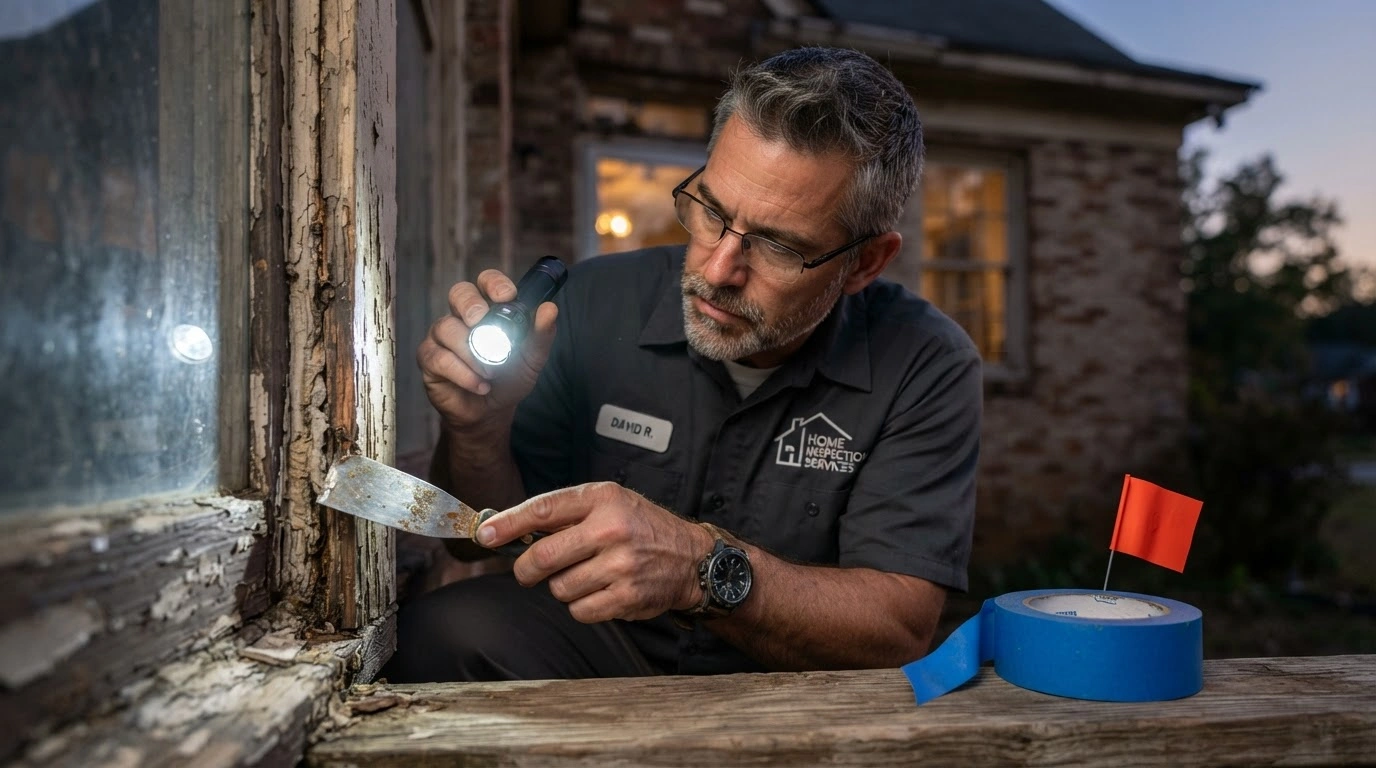
Do this at dusk or with the lights off. I use a flashlight, a putty knife to test caulk, and painter's tape to flag every gap so I don't lose it. Give yourself an hour for a typical house and more time for an older one. Walk the outside first, then the inside, and write down what you find.
Outside the House
Foundation and Siding: Look along the line where the siding meets the foundation and run the knife along the old caulk. Caulk that pulls away or crumbles gives spiders easy access to your home. Seal small cracks with exterior-grade caulk. One edge case: if you have brick veneer, leave the weep holes alone. Those small openings drain moisture and allow moisture to evaporate. Sealing them can lead to mold growth and wood rot, creating conditions conducive to spiders.
Doors and the Garage: Turn the lights off inside, then crouch and look at the bottom of each exterior door. Any daylight (or a flashlight beam) means a gap. Replace worn door sweeps and check that weatherstripping still touches the frame on all four sides. I find the most misses in the garage. The rubber bottom seal on a garage door gets brittle at the corners where it meets the track, and that is exactly where wolf spiders slip in. Don't try to fix a bad threshold by spritzing a scented spray along it, either. Spiders don't actually smell Lysol the way people assume, and whatever effect you get fades once the spray dries.
Windows and Screens: Check ground-level windows first, since those are the easiest for crawlers to invade homes. Look for torn screens, gaps where the screen frame meets the window, and cracked caulk around the trim. A patch kit fixes small tears. Caulk fails faster on joints that flex with the seasons, so expect to redo window trim more often than foundation cracks.
Utility Lines: Check where the gas meter, hose bib, dryer vent, AC line set, and cable or phone lines enter the wall. Installers rarely fill the gap around them. Use caulk or expanding foam on small gaps. For the dryer vent, make sure the flap closes on its own. Don't stuff steel wool into it, because lint buildup can result in a fire hazard.
Roofline, Attic Vents, and Chimney: Check that vents have intact mesh screening. Use mesh here, not caulk. Sealing a vent with caulk creates a solid seal that blocks the airflow from your attic. Your furnace relies on the safe exhaust of combustion gases, so blocking the vent can push harmful gases back into the home.
Inside, Room by Room
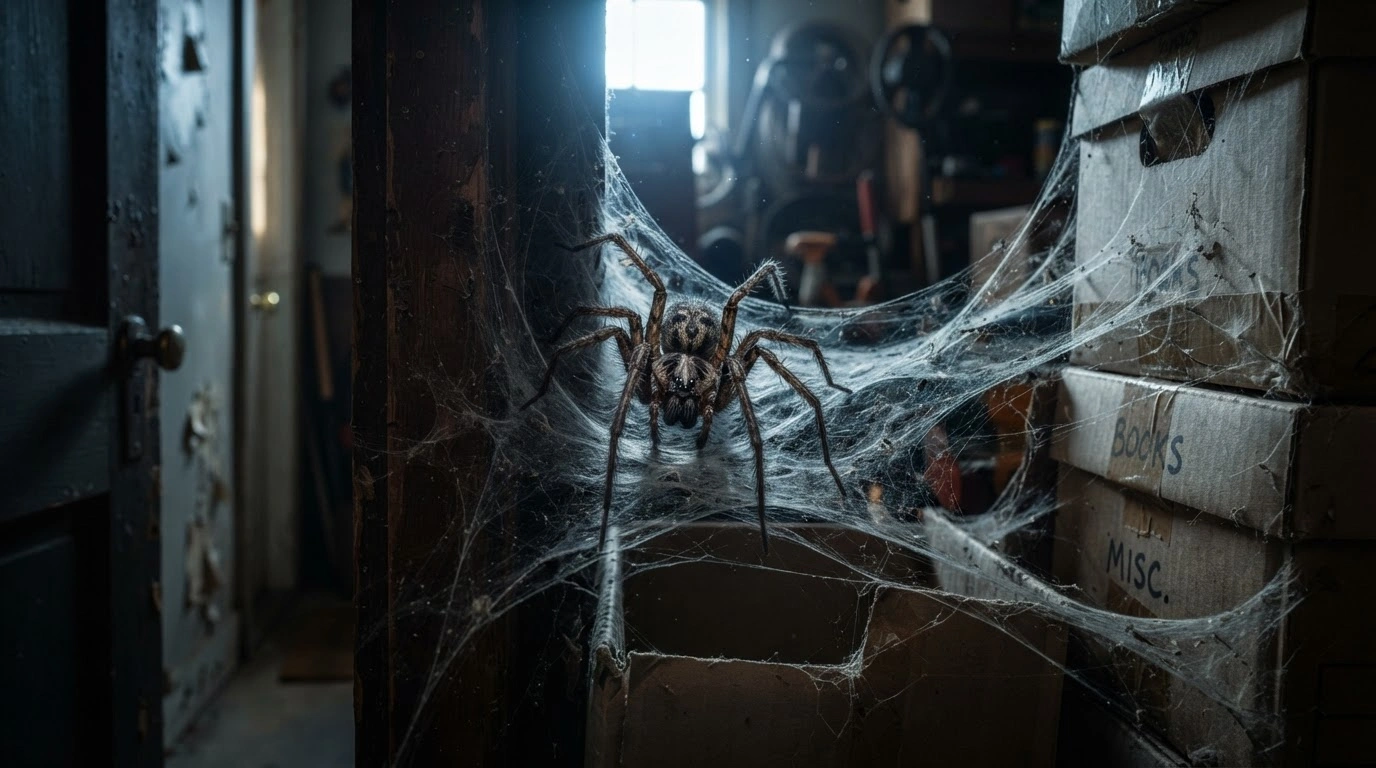
Garage: Spiders that get in here are one door away from your kitchen. Look at the door into the house and the corners behind stored boxes. Swap cardboard for sealed plastic bins where you can.
Basement or Crawl Space: Check the rim joist (the wood ledge on top of the foundation), the spots where pipes and wires come through the wall, and window wells. Spiders like dark, damp, undisturbed spaces.
Kitchen and Laundry: Look under sinks where pipes pass through the cabinet wall, and behind the dishwasher and dryer. Gaps around pipes are common. Also look at what spiders eat. If you're seeing flies or gnats near the drain, the spiders are following them in.
Bathrooms: Check around the exhaust fan housing and any plumbing access panel. Moisture draws insects, and insects draw spiders.
Bedrooms and Closets: Entry gaps matter less here. This is where hitchhikers show up. Boxes from the garage, firewood carried in for the fireplace, and houseplants moved indoors for the season can all carry spiders. Shake things out and inspect them before you bring them in.
Attic Access: Look at the hatch edge and any wires or pipes passing through the ceiling below it.
What Sealing Won't Fix?
I'll be honest about the limits. Sealing doesn't help with existing spiders in the home. If you seal in early fall, vacuum up the strays first, along with webs and egg sacs; it can only prevent further infestation. It also won't cut the food supply. Webs gathering around porch lights tell me flying insects are gathering there too, so moving or dimming outdoor lighting near doors helps more than people expect.
Sprays are for the spider in front of you, not the gap behind it. If you want the trade-offs, I laid them out in the pros and cons of using Windex on spiders. If you've sealed everything and still see steady numbers, that's where professional spider pest control earns its fee. A technician can find the insect problem feeding them, which is hard to spot on your own.
Recheck Twice a Year
Caulk shrinks, sweeps wear down, and screens tear. I recheck in early fall and again in spring. The second pass usually takes fifteen minutes because you already know the weak spots and the full list of what to inspect and why. SDSU Extension's guide to spider-proofing your home is a good non-commercial reference to keep handy.