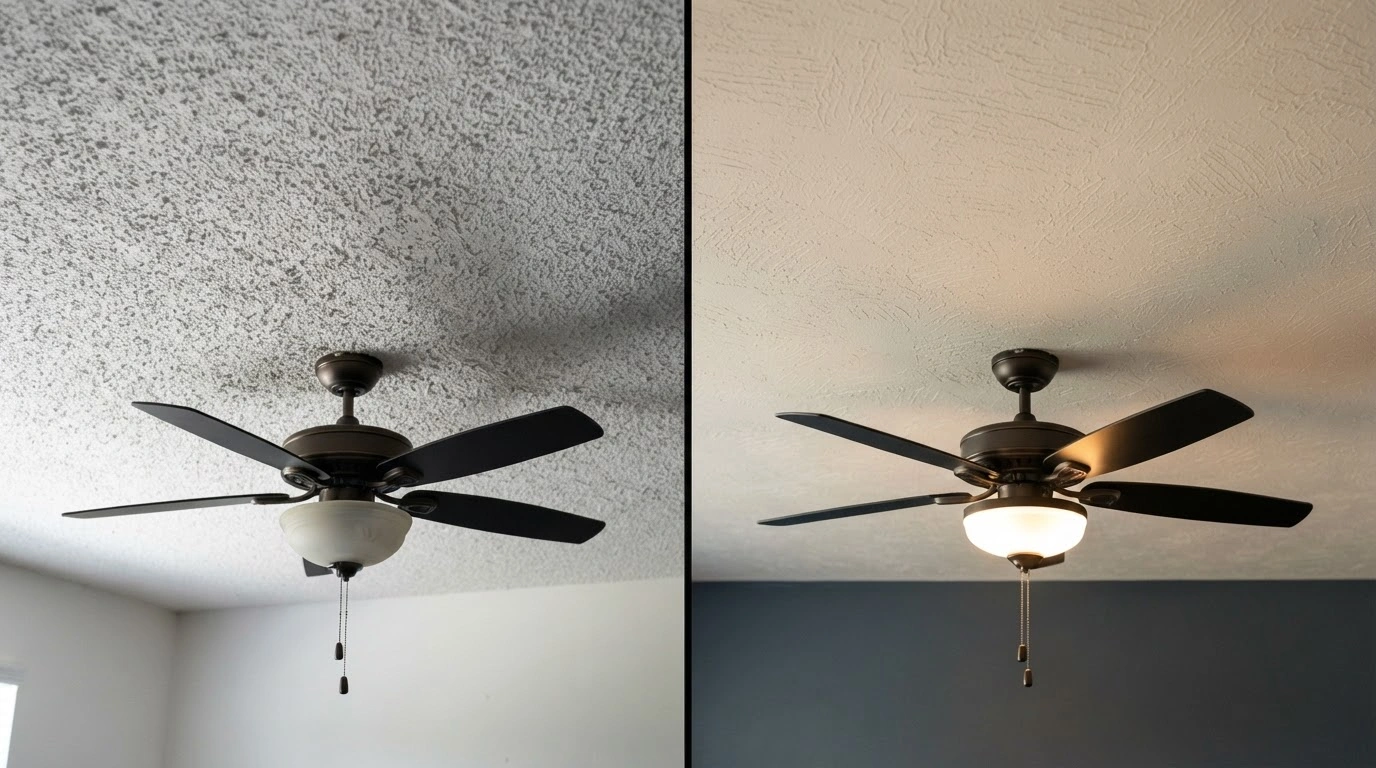
Have you been thinking of renovating your home ceiling lately? Which ceiling design do you think will suit your interiors best? Many homeowners often consider popcorn and textured ceilings as viable options. While some people see these designs as similar, they are not. A textured ceiling is a category of ceiling design, while a popcorn ceiling is a variety of textured ceilings. In a nutshell, all popcorn ceilings are textured ceilings, but not all textured ceilings are popcorn ceilings. So, if you're unsure what to choose for your ceiling, it is essential to understand the difference between a popcorn ceiling and a textured ceiling.
What is a Popcorn Ceiling?
A popcorn ceiling is a textured ceiling known for its bumpy appearance. It is also known as an acoustic ceiling or cottage cheese ceiling. Workers apply wet joint compound to the drywall surface using a trowel technique or a hopper gun to create a bumpy surface. While this ceiling option was popular between 1960 and 1990, homeowners no longer prefer it because of its outdated look and difficulty to clean.
What is a Textured Ceiling?
A textured ceiling comes in different patterns and materials, offering an alternative to a popcorn ceiling. Although a textured ceiling is similar to a popcorn ceiling in covering imperfections, it is much easier on your eyes and offers a modern look to your room interior. A textured ceiling is considered much safer than popcorn because, unlike a popcorn ceiling, it does not contain asbestos that can lead to health hazards.
Popcorn Ceiling vs Textured Ceiling: Core Differences
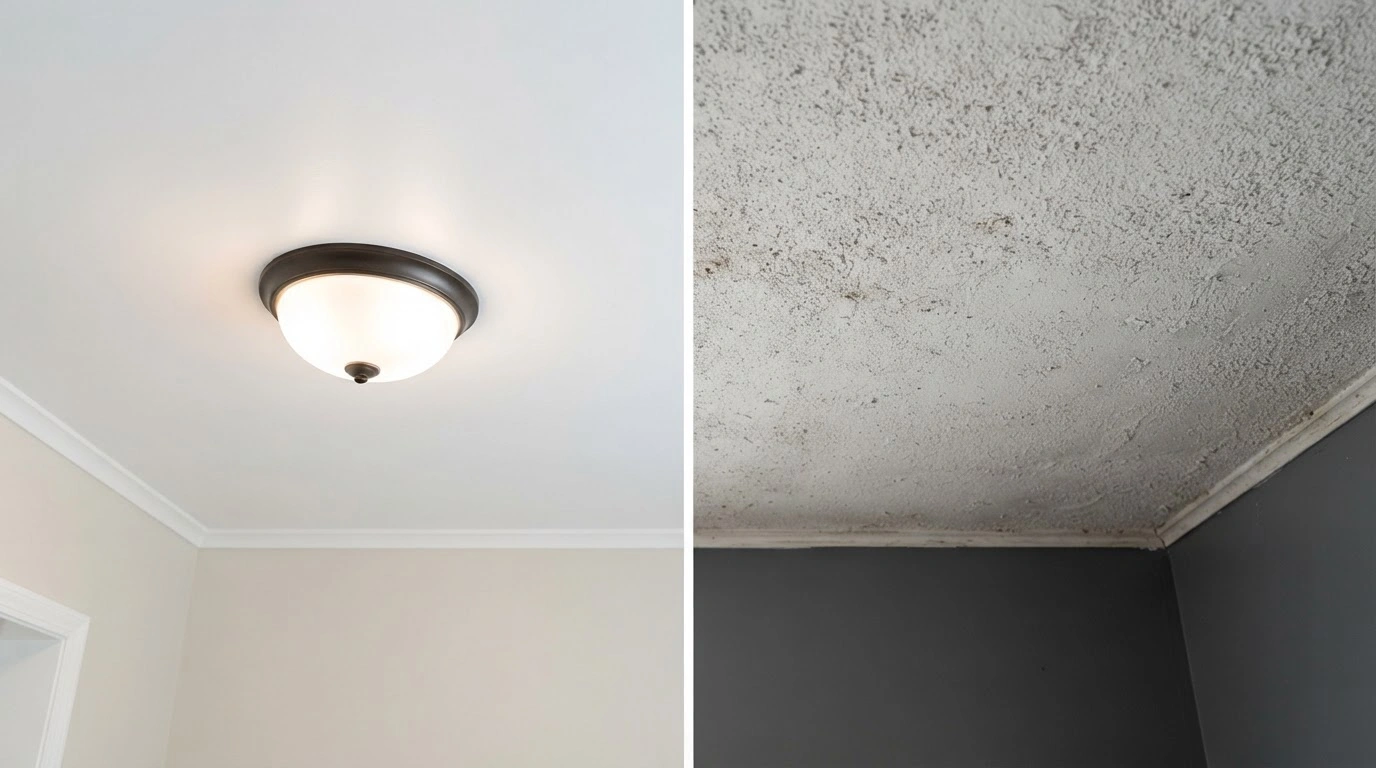
Want to know how a popcorn ceiling is different from a textured ceiling? Here are the core differences at a glance.
| Features | Popcorn Ceiling | Textured Ceiling |
| Appearance | Bumpy and rough, resembling cottage cheese | Smooth with subtle patterns |
| Materials used | Spray compound and aggregate | Specialty texture products, plaster, and drywall mud |
| Style | Outdated, as it was more popular between the 1960s and 1990s. | Modern and versatile |
| Sound Absorption | Deep bumps excellently absorb sound | Moderate diffusion softens the sound |
| Maintenance | Hard to clean due to trapped dust | It is easy to clean and repaint |
| Repair Work | Difficult to repair and match as texture changes over time | Repairing and blending is much easier, but it requires skills to achieve the pattern |
| Safety | It is known for its asbestos content | It is free from any harmful materials such as asbestos |
| Application Cost | It is much cheaper, at $1 to $2 per square foot | The cost depends upon the texture and may vary from $1 to $3 per square foot |
| Resale Value | Lower value as buyer choices have changed over time | As modern buyers accept texture ceiling, it has a good resale value |
Popcorn Ceilings: Appearance, History, and Uses
Common Names and Appearance: A popcorn ceiling has a heavily bumpy texture, resembling popcorn or cottage cheese. The unusual peaks on the surface create micro-shadows throughout the interior. It is also known by many other names, including sprayed ceiling finish, stucco ceiling, or most commonly acoustic ceiling.
History and Material: Water, paint, and aggregate materials are used on the drywall, while vermiculite and mineral fiber were used earlier. However, before the 1970s, asbestos was used to protect the ceiling from fire and for better durability. The Clean Air Act in 1970 banned asbestos use. But because existing asbestos stock was still in use, popcorn ceilings made before the 1980s still contain asbestos.
Popcorn Ceiling Uses: Popcorn ceilings became popular because they could hide flaws in drywall efficiently. They also came with features like excellent sound absorption and a low application cost.
Textured Ceilings: Different Types, Materials, and Uses
Different Types of Textured Ceilings: Textured ceilings come in different types, including orange peel texture with an orange-peel skin appearance, knockdown texture with shallow irregular peaks, decorative swirl texture, and stipple texture with a dotted pattern.
Materials Used: A modern textured ceiling uses a combination of materials, including drywall mud, premixed texture products, and plaster. Unlike popcorn ceilings, textured ceilings do not contain asbestos.
Textured Ceiling Uses and Benefits: Modern textured ceilings cover minor drywall flaws and showcase great designs. These ceilings are more durable, safer, and easier to paint and maintain. If you already have a textured ceiling and want to refresh its appearance, follow our guide on how to paint a textured ceiling.
Popcorn Ceiling vs Textured Ceilings: Pros and Cons
Both popcorn and textured ceilings have their own set of pros and cons.
Pros and Cons of Popcorn Ceilings
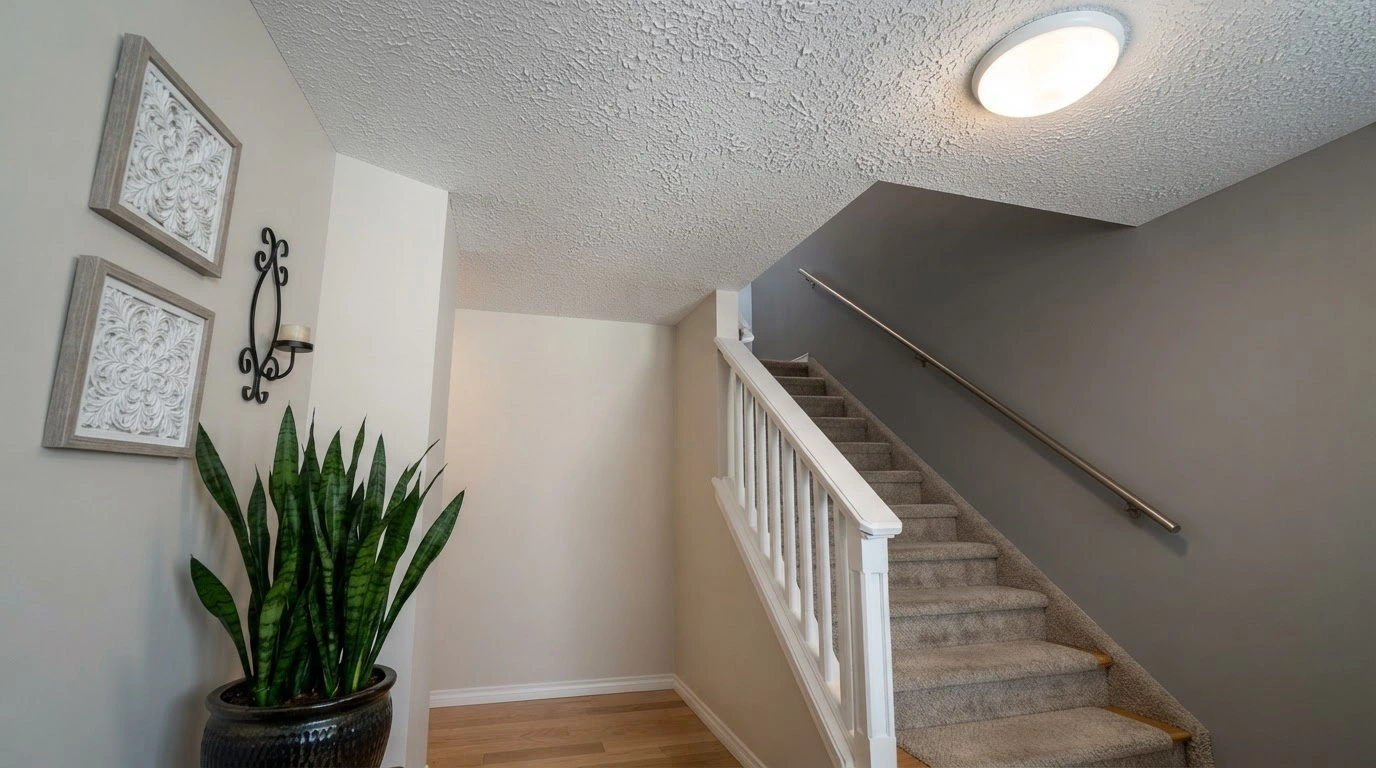
Pros:
- Covers major drywall imperfections, including nail pops, uneven joints, and seams.
- It absorbs sound very well, reducing echo and dampening floor noise.
- The cost of the popcorn ceiling is the lowest among ceiling finishes at $1 to $2 per square foot.
Cons:
- The appearance is outdated, and most buyers prefer to renovate it.
- Cleaning it is very hard, as it traps dust and dirt easily.
- Repairing popcorn ceilings is also difficult because it's hard to match the texture after water damage and scraping.
- Popcorn ceilings made before the 1980s have used harmful materials, especially asbestos.
- People often prefer to replace popcorn ceilings with modern styles after buying a property with them. This often lowers the resale value of a house with this design.
In 2026, cons overshadow the pros of popcorn ceilings. Thus, most modern homeowners prefer not to get popcorn ceilings because, even though they are cheaper to apply, maintenance costs are pretty high.
Pros and Cons of Textured Ceilings
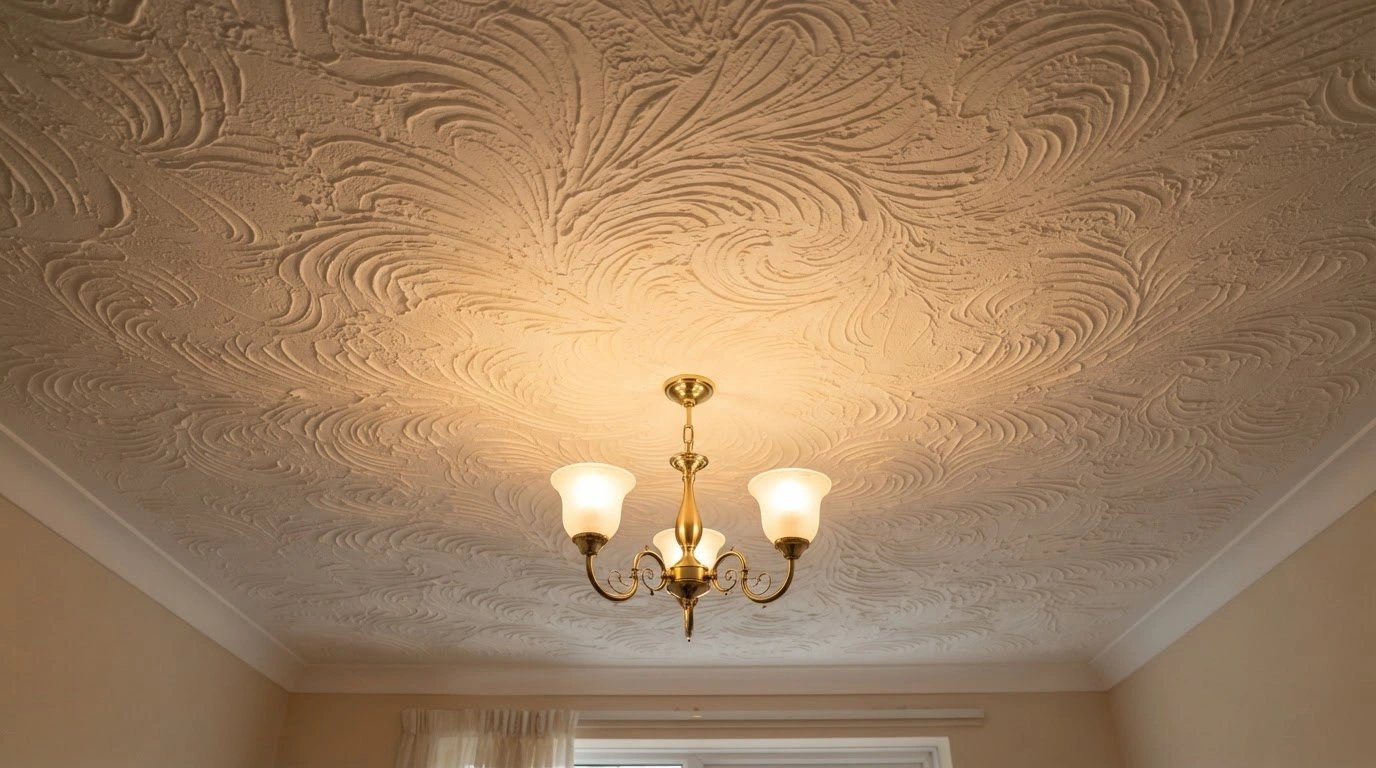
Pros:
- The modern appearance of textured ceilings complements any paint color, fixtures, or design trends.
- They are highly durable because they resist crumbling, flaking, and chipping.
- Cleaning a textured ceiling is easy, as you can wipe away dust and dirt with a damp cloth.
- It offers natural depth to interiors with a minimalist approach.
- It can add positive resale value to a property.
Cons:
- Certain intricate patterns can trap dust, making them difficult to clean.
- Skilled professionals are required for a perfect textured ceiling.
- Application costs more than a popcorn ceiling, at $1 to $3 per square foot, depending on the type of textured ceiling you choose.
The pros of a textured ceiling outweigh its cons, making it a favorite among modern-day homeowners.
Final Verdict: Popcorn Ceiling or Textured Ceiling
The most prominent difference between a popcorn ceiling and a textured ceiling is that the former is classic and traditional, while the latter is modern. In addition, the use of asbestos in popcorn ceilings makes it less appealing to modern homeowners who are more concerned about health hazards. On the other side a textured ceiling is slightly more expensive than a popcorn ceiling. The best approach is to weigh the pros and cons of both options carefully to choose the one that best suits your home. If you already have a textured ceiling and prefer a smoother, updated appearance, you may want to remove the textured ceiling rather than simply repaint it.