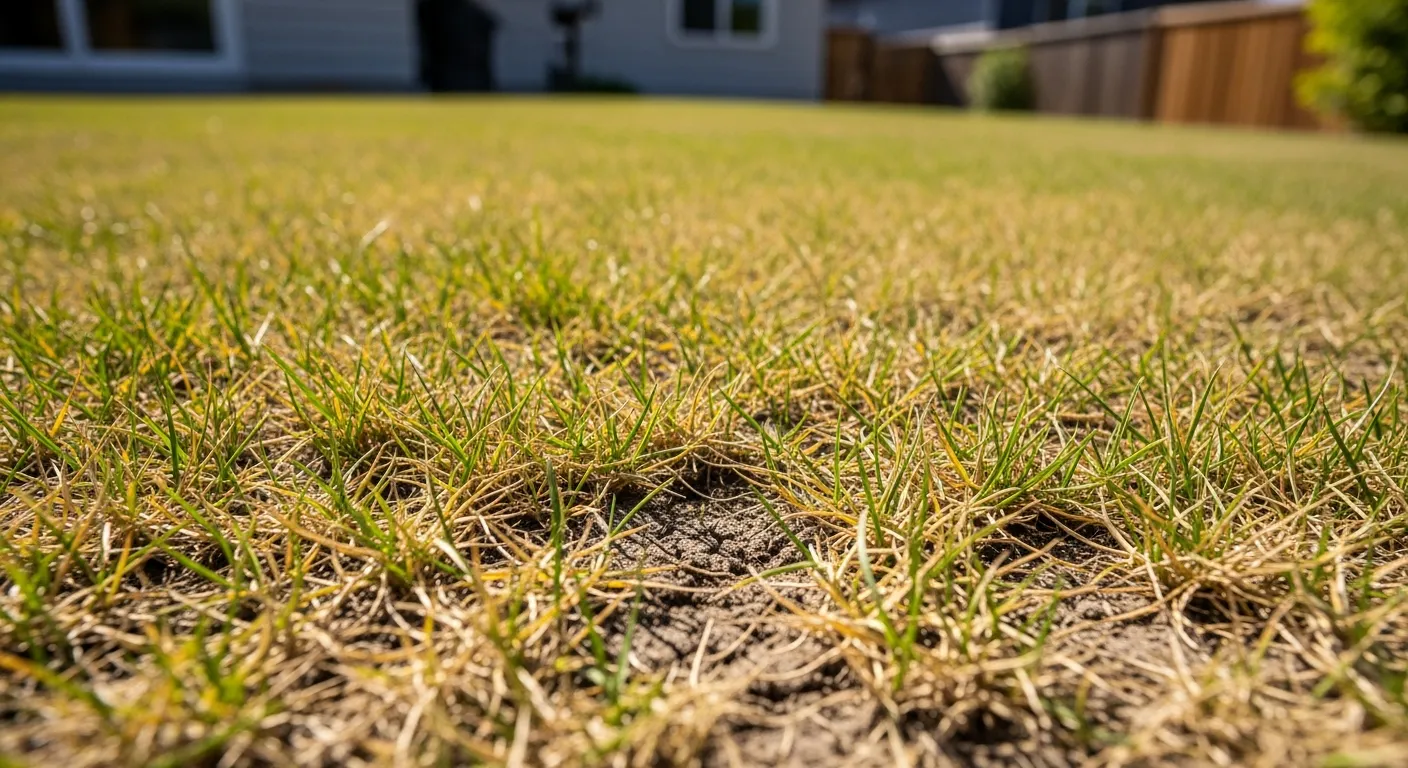
A fescue lawn can look great in spring and early fall, then suddenly start thinning out once summer arrives.
Homeowners often notice lighter green areas, bare spots, brown patches, or grass that seems to lose its thickness no matter how often it is watered. It is tempting to assume the answer is more fertilizer or more water. But summer thinning is usually a sign that something else is putting stress on the lawn.
Tall fescue is a cool-season grass. It can stay attractive through much of the year, but hot weather, humidity, compacted soil, disease pressure, and poor watering habits can all make it struggle during the summer months.
Before buying more lawn products, it helps to check what is actually causing the problem. Here are seven common reasons fescue lawns become thin in summer and what homeowners should look for first.
1. Heat Stress Is Pushing Cool-Season Grass Beyond Its Comfort Zone
Fescue prefers cooler growing conditions. During long stretches of heat, the grass naturally slows down and may look less dense than it did earlier in the year.
This does not always mean the lawn is dying. Sometimes, the grass is simply under stress and trying to conserve energy. But when high temperatures continue for weeks, weak areas can become more noticeable.
Heat stress often shows up as:
- Grass that looks dull or gray-green instead of deep green
- Blades that fold or curl inward
- Thin areas near driveways, sidewalks, and patios
- Brown patches in full-sun sections
- Turf that does not spring back after being stepped on
Pavement can make the problem worse. Heat radiating from concrete and asphalt can dry out nearby soil faster than the rest of the yard. Slopes and exposed areas may also lose moisture more quickly.
During hot periods, avoid trying to force rapid growth. Heavy fertilizer applications and aggressive mowing can put even more pressure on an already stressed lawn. Focus first on helping the grass survive the season with sensible watering, proper mowing, and reduced traffic in the weakest areas.
2. Shallow Watering May Be Leaving Roots Too Close to the Surface
Many homeowners water frequently but still see a thin lawn. The issue may not be the amount of water. It may be how the water is being applied.
Quick, shallow watering encourages roots to remain near the surface. That makes grass more dependent on daily moisture and more vulnerable when temperatures rise.
A better approach for established lawns is usually deeper, less frequent watering. This encourages roots to grow farther into the soil, where temperatures are more stable and moisture lasts longer.
Watch for signs that watering is not reaching the root zone:
- Water runs across the lawn instead of soaking in
- The surface looks wet, but soil below is dry
- Grass dries out rapidly after a hot afternoon
- One section stays soggy while another becomes brown
- The lawn looks stressed even with frequent irrigation
It is also important to pay attention to where water goes after a rainstorm. Poor grading, compacted soil, downspout runoff, and low areas can all create inconsistent moisture conditions.
For homeowners dealing with standing water or runoff, Southern Reside’s guide to yard drainage solutions is a useful starting point for identifying common drainage trouble spots around the home.
3. Compacted Soil Can Keep Water, Oxygen, and Nutrients From Reaching Roots
A lawn can receive plenty of water and still struggle if the soil underneath is compacted.
Compaction happens when soil particles are pressed tightly together. This is common in high-traffic areas, along walkways, near gates, beside driveways, and in yards with heavy clay soil. When the ground becomes dense, water can pool on top or run off instead of moving down into the root zone.
Grass roots also need oxygen. In hard, compacted soil, they cannot spread as easily or access the conditions they need to stay strong through summer stress.
A simple way to check for compaction is to push a screwdriver into moist soil. If it is difficult to push it several inches into the ground, compaction may be limiting root growth.
Other signs include:
- Thin grass in high-traffic areas
- Water puddling after rain or watering
- Soil that feels hard and dry beneath the surface
- Grass that struggles near walkways or driveways
- Bare areas that return in the same places every year
For compacted fescue lawns, core aeration and overseeding for thin grass can help create better seed-to-soil contact and improve the lawn’s ability to fill in during the right growing season.
4. Mowing Too Short Can Make Summer Stress Worse
A short lawn may look neat immediately after mowing, but cutting fescue too low can create more problems during hot weather.
Grass blades capture sunlight and help the plant produce energy. When too much leaf surface is removed, the lawn has fewer resources to support its roots. The soil is also exposed to more heat, which can dry it out faster.
Scalping is especially damaging. This happens when the mower cuts grass much shorter than usual, often on uneven ground or after waiting too long between mowings.
To avoid unnecessary stress:
- Never remove more than one-third of the grass blade at one time.
- Keep mower blades sharp for a cleaner cut.
- Raise the mowing height during hot, dry periods.
- Avoid mowing during the hottest part of the day.
- Do not mow when the lawn is saturated after rain.
A slightly taller fescue lawn often looks fuller and holds up better when the weather turns hot. It can also shade the soil, helping reduce moisture loss and making weeds less likely to move into open areas.
5. Brown Patch Can Turn Small Weak Areas Into Larger Thin Spots
Not every brown or thinning area is caused by drought.
In warm, humid conditions, fescue can be vulnerable to lawn disease. Brown patch is one of the most common problems homeowners notice during summer, especially when nights stay warm and grass stays wet for long periods.
It often starts as circular or irregular patches of brown or tan grass. In some cases, the outer edge of the patch may appear darker, particularly in the early morning when dew is present.
Brown patch can be confused with heat stress, dry soil, or even grub damage. The difference is that disease tends to spread in patterns and may return to the same areas year after year, especially in shaded, humid, or poorly drained parts of the lawn.
To reduce disease pressure, homeowners can:
- Avoid watering late in the evening
- Improve airflow around dense shrubs and shaded sections
- Avoid excessive fertilizer during stressful heat
- Keep mower blades sharp
- Clean up heavy clippings or leaf debris
- Watch for recurring patch patterns
If disease symptoms are spreading rather than improving, a targeted approach is often needed. Homeowners looking for brown patch treatment for Charlotte fescue lawns should first make sure the issue is correctly identified, since brown patch can resemble several other lawn problems.
6. Weeds Take Advantage of Open, Stressed Turf
When fescue thins out, weeds rarely wait long to move in.
A dense lawn naturally limits the space, sunlight, and soil exposure weeds need to establish. But when grass becomes weak from heat, disease, compaction, or poor watering, open areas give weeds an opportunity to spread.
Some weeds are easy to spot. Others blend into the lawn at first but eventually change the texture and color of the turf. You may notice a section that looks green from a distance but feels uneven or coarse when you walk through it.
Common warning signs include:
- Different-looking plants growing in thin patches
- Weeds spreading along driveway edges and sidewalks
- Bare areas that become weedy instead of filling back in
- Uneven color or texture across the lawn
- New weeds appearing after summer stress
The best long-term weed strategy is not just removing what is visible. It is also addressing why the lawn became thin in the first place.
Southern Reside’s article on how to identify and treat lawn rust is also worth reading because stressed grass can be more vulnerable to multiple lawn-health issues, not only weeds.
7. Some Summer Damage Will Not Fully Recover Until Fall
One of the hardest parts of caring for fescue is knowing when to act and when to wait.
During severe summer heat, the goal is often to protect the lawn from further stress rather than expecting quick, dramatic recovery. Fescue may survive the summer but still look thin until cooler temperatures return.
Fall is usually the more productive recovery period for many cool-season lawns. That is when homeowners can address thin areas, improve soil conditions, add seed where needed, and give grass time to establish before the next summer arrives.
This is especially important in North Carolina’s transition-zone climate, where lawns can face hot, humid summers but still rely on cool-season turf in many yards.
A simple fall recovery plan may include:
- Checking for compacted soil
- Repairing drainage issues
- Controlling weeds before reseeding
- Overseeding thin or bare areas
- Adjusting mowing and watering habits
- Monitoring recurring disease-prone sections
The best plan depends on the lawn’s specific condition. A shaded yard with poor drainage may need a different approach than a sunny lawn damaged by foot traffic and heat.
Start by Finding the Cause of the Thinning
A thin fescue lawn is usually not the result of one mistake.
Summer heat may be part of the problem, but it often works alongside compacted soil, shallow roots, poor watering, mowing stress, disease pressure, weeds, or drainage issues. The more clearly homeowners identify the cause, the easier it becomes to choose the right solution.
Before buying another product, walk through the yard and look for patterns. Where is the grass thinning? Does water pool or run off? Is the soil hard? Are there circular brown patches? Is the lawn being cut too short?
A healthier fescue lawn usually starts with better conditions below and around the grass. When roots have room to grow, water reaches the soil properly, and summer stress is managed early, the lawn has a much better chance of returning fuller and stronger in the seasons ahead.