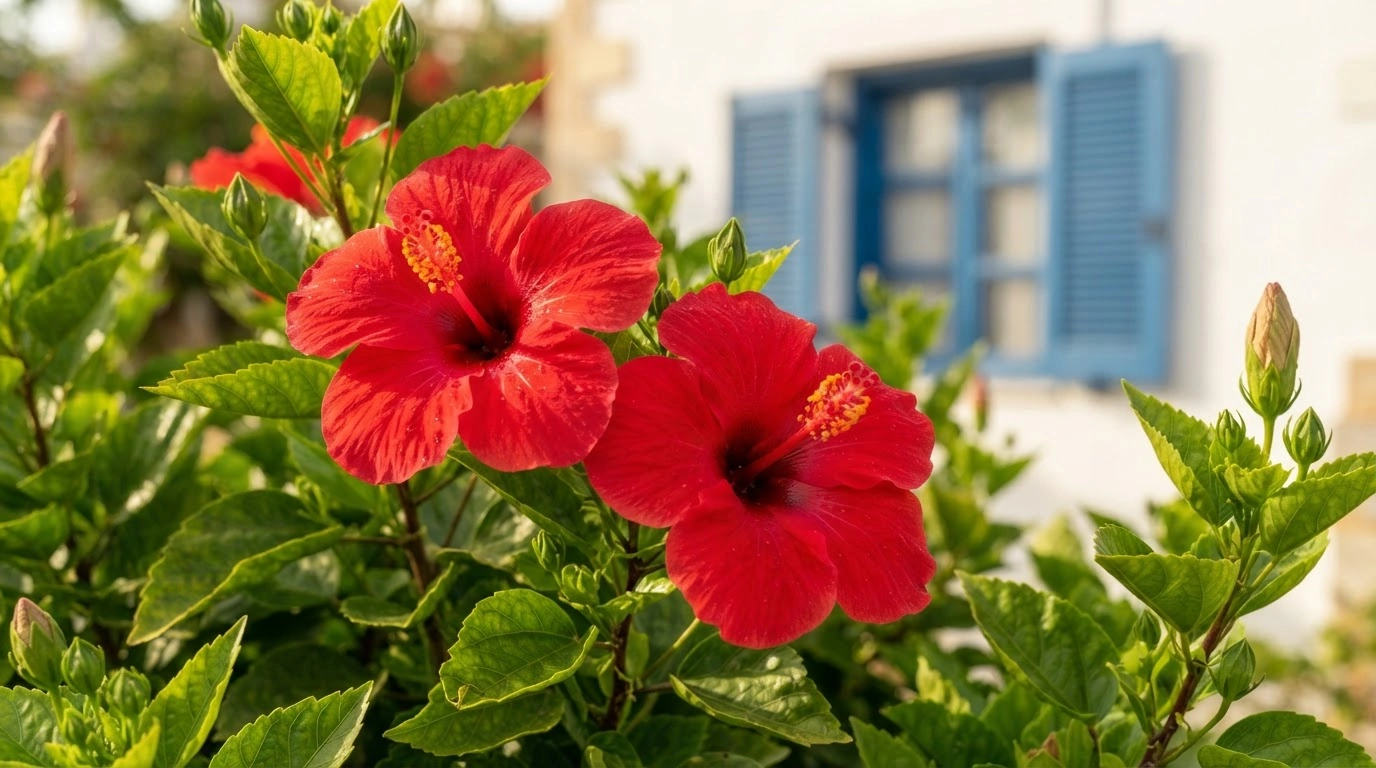
The best fertilizer is one with more potassium than phosphorus, something like 12-4-8 or 17-5-24, fed lightly every two weeks during the growing season instead of one big dose a month. I learned this the hard way. I used a leftover rose fertilizer from the shed for my first summer with a potted tropical hibiscus, as it was already there. It's high in phosphorus, and my plant rewarded me with dark, glossy leaves and almost no flowers for six straight weeks.
Hibiscus don't need much phosphorus once they're established. In fact, too much of it blocks the plant from taking up iron, which is one of the most common reasons container hibiscus develop pale, washed-out new leaves that people often mistake for a watering problem. Once I switched to a 12-4-8 bloom formula, new buds showed up within about ten days.
Granular, Liquid, or Organic: What I Actually Use
I keep two hibiscus, one in the ground and one in a large pot on the patio, and I feed them differently on purpose.
The in-ground plant gets a slow-release granular fertilizer three times a year: early spring when the new growth starts, again right after the first flush of blooms fades in June, and again in late summer. That carries it to frost. One habit that made a real difference is scattering the granules out at the edge of the canopy instead of against the trunk, since that's where the feeder roots actually sit. Dumping it at the base just wastes half the bag.
The potted one needed a different approach. Containers leach nutrients out through the drainage holes every time you water, so granular alone leaves it hungry by midsummer, with fewer new buds and smaller flowers. I switched to a quarter-strength liquid feed every two weeks from April through September, and the bloom count picked back up within about three weeks. The tradeoff is that it's easy to forget. I skipped two feedings during a July heat wave and watched flowering slow down again almost immediately, so this method only works if you actually follow the schedule.
If you'd rather skip synthetic fertilizer, I've written before about using coffee grounds as a slow, organic nitrogen source for hibiscus. It works well as a supplement between regular feedings, but I wouldn't rely on it as the only feeding method.
When to Feed, and When to Stop?
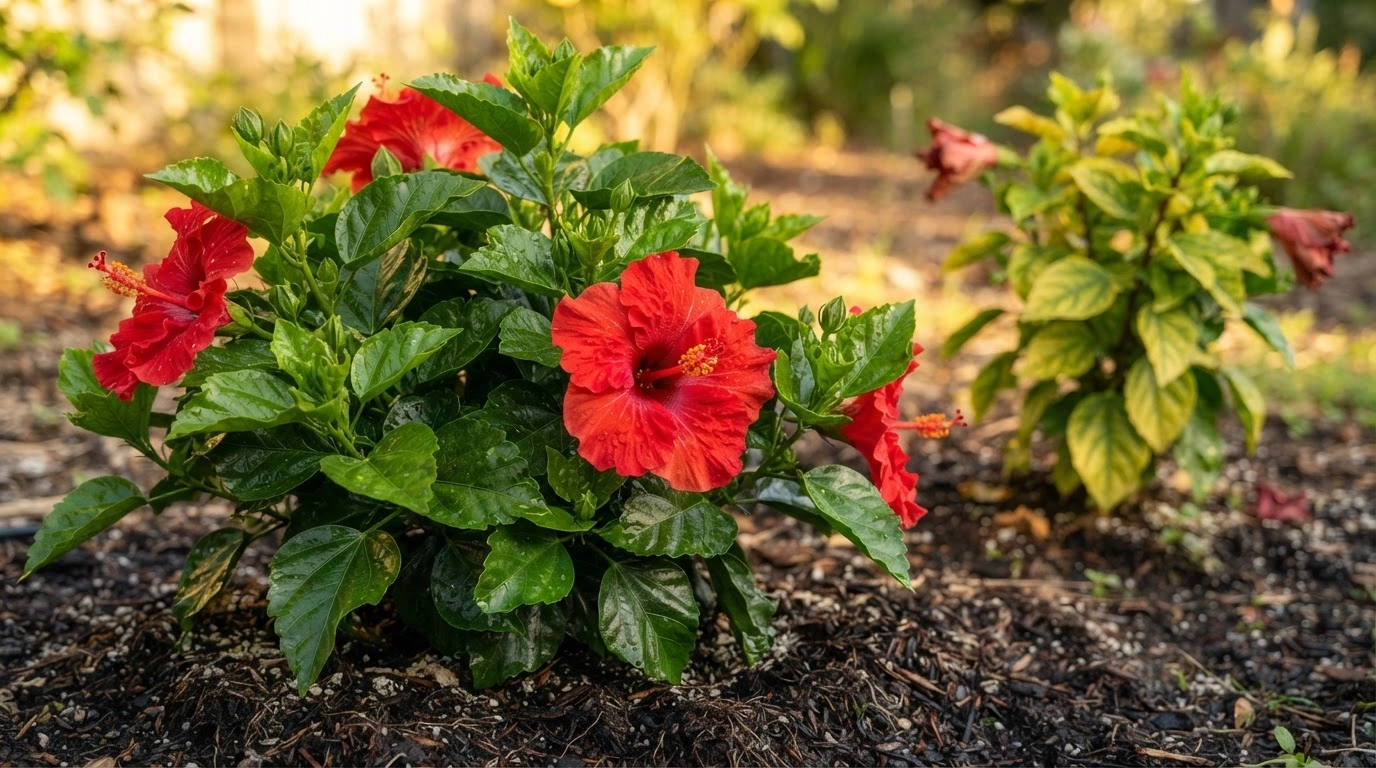
Start feeding once new growth appears in spring and stop about six weeks before your first expected frost. Feeding a slowing or dormant plant just builds up salts in the soil without helping growth. That window runs longer along the Gulf Coast and through most of Florida, where hibiscus barely slows down, than it does further north, where the feeding season can be closer to four months than six.
Hardy hibiscus varieties need even less: Clemson Cooperative Extension notes that many hardy types grow well on little more than a two-inch layer of compost each year, saving a synthetic feed for spring only if blooms are lagging.
Soil pH matters too. Hibiscus prefers slightly acidic soil, around 6.5, for the same reason gardenias do. If you grow both, our gardenia fertilizer guide covers that pH and iron chlorosis overlap in more detail.
Signs You're Feeding It Wrong
- Yellow Leaves With Dark Green Veins- usually mean magnesium deficiency, not a watering problem, and an Epsom salt drench clears it up within a couple of weeks in most cases.
- Iron Deficiency- looks similar but can be seen mainly on new growth, with the leaf turning yellow between the veins while the veins themselves stay green.
- Scorched Leaf Edges- Leaf edges that look scorched or crisp, plus buds that form and then drop before opening, usually point to overfeeding.
- Crisping After Feeding- If you notice crisping after a feeding, flushing the soil with plain water for a few minutes usually helps more than skipping the next feeding entirely. This is because it moves the excess salts past the root zone instead of leaving them to concentrate further.
| Some Tips | Hibiscus are more sensitive to fertilizer salt buildup than a lot of flowering shrubs I grow, so when in doubt, feed lighter and more often rather than heavier and less often. |