A room can bring together an old oak table, new painted cabinets, and stone with a strong grain. The parts do not have to share an age or style, but they need a few shared details. Bronze hardware can supply one of those links through its tone, shape, and feel in the hand. Makers such as Rocky Mountain Hardware cast bronze pieces and finish them by hand, giving designers a metal with depth to work with. Its role in the room depends on how it relates to what is there.
Wood and Stone Give the Metal Its Context
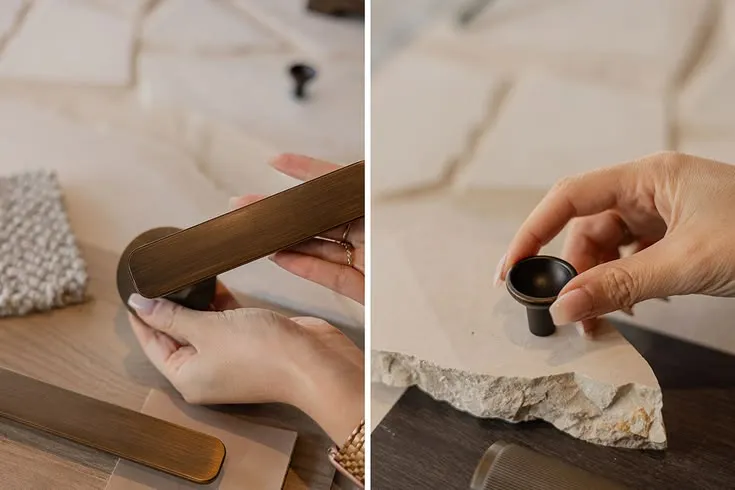
Bronze takes on a different role beside each surface. A dark finish may stand out against pale paint and sit more quietly against walnut. A lighter metal can bring a point of light to a deep green cabinet. The useful choice comes from seeing how those tones work together. Place a sample beside the wood, paint, and stone planned for the room. This gives a designer and homeowner a shared view of the palette, with more to discuss than a finish name on a screen.
Warmth does not require each metal to have a gold tone. RMH offers silicon bronze with warm copper tones and white bronze with a silvery cast. That range leaves room for a cooler metal within a palette of warm wood and soft fabrics. A nearby lamp or mirror can provide a second point of reference without repeating the finish on each object. The aim is a room whose parts have a clear relationship. A close match is one way to do that, but a considered difference can work as well.
Scale Decides How Much Presence a Piece Has
The shape of a handle affects how much attention it asks for. A broad backplate can make a door into a more distinct feature. A small knob can leave the grain of a cabinet front in view. These choices should respond to the woodwork around them. On a paneled door, the plate can echo the width of the rail. On a plain front, the same piece becomes a more distinct shape. Test both views before settling on the scale. A tall door may carry a broader plate than a small cupboard can, even when the finish stays the same. A piece that feels right alone may take on far more weight when it repeats along a wall of cabinets.
A sample held in place helps test that balance. View it from the room entrance, then move close enough to grasp it. The first view reveals the pattern the hardware makes across the room. The second reveals its edge, depth, and comfort. A designer can use both to judge whether the piece supports the woodwork or calls too much attention to itself. There is no need for each handle to become a focal point. A well-shaped, quiet piece can give a crafted surface room to lead.
A Living Finish Makes Time Part of the Palette
Bronze with a living patina changes through touch, use, and the setting. That can suit a room where worn wood and natural stone already have a sense of age. It also calls for a clear discussion with the owner. The finish sample records a starting point, not a promise that each piece will hold that exact shade. A frequently used handle may age differently from one on a guest-room cabinet. The bronze should feel right as it changes through use.
This is part of the appeal of hand-finished bronze, but it should be chosen with care. Someone who wants a fixed, uniform surface may have a different brief from one who welcomes signs of use. Review the maker's care guidance with the finish selection. Gentle care can preserve the intended character, while the wrong polish can change it. Give the bronze the same thought as a floor or table that will also show use. Each will have its place in the home's daily life.
A Collected Room Still Benefits From a Clear Plan
Mixing pieces works best when a few choices remain consistent. A bronze tone can link a pantry pull with a door handle seen from the same room. Their shapes may differ because the tasks differ. In another space, the shape might form the link while the finish responds to the room's own light. The design team can choose which detail carries through and where a change has a purpose. That keeps the result connected without making a home feel as though each room came from the same display.
Carry those decisions into the drawings and the order. Note the chosen design, finish, size, and the location where each piece belongs. A special scale or shape may warrant a discussion about custom work with the maker and dealer. Resolve that need while the woodwork can still respond to it. Bronze then becomes part of how the room is composed, from the view across the space to the handle used each day. Its quality has a setting in which to be seen and felt.