Summer is the season gardeners look forward to. The sun is shining, the days are long, and your greenhouse is bursting with life. However, high temperatures increase evaporation and plant transpiration, causing moisture levels inside the greenhouse to rise quickly. When warm, humid air becomes trapped, it can create ideal conditions for mold, mildew, and fungal diseases
Maintaining proper humidity requires a combination of good ventilation, airflow management, proper watering, and effective moisture control. By understanding the causes of high humidity and taking the right steps, you can create a healthier growing environment throughout the summer.
Why Summer Humidity Is a Problem
Before we dive into solutions, let’s understand why humidity spikes in summer. Warm air holds more moisture than cool air, and when your greenhouse traps that warm, moist air, humidity levels can skyrocket. This creates several problems for your plants.
High humidity interferes with transpiration, the process by which plants release moisture and absorb nutrients. When the air is already saturated with water, plants struggle to cool themselves and take up nutrients, leading to stress and stunted growth.
Excess moisture also creates the perfect environment for fungal diseases like powdery mildew, botrytis, and downy mildew, which can devastate your crops. Furthermore, humid conditions attract pests like spider mites, aphids, and fungus gnats, which thrive in warm, damp environments.
How to Lower Greenhouse Humidity
Your goal in summer is to maintain humidity levels between 40 and 60 percent for most greenhouse crops. This range keeps your plants healthy while discouraging disease and pests. Here is how you can achieve it.
Improve Greenhouse Ventilation
Improving ventilation is one of the most effective ways to lower greenhouse humidity in summer. Proper air exchange helps remove warm, moisture-filled air and replaces it with fresher air from outside.
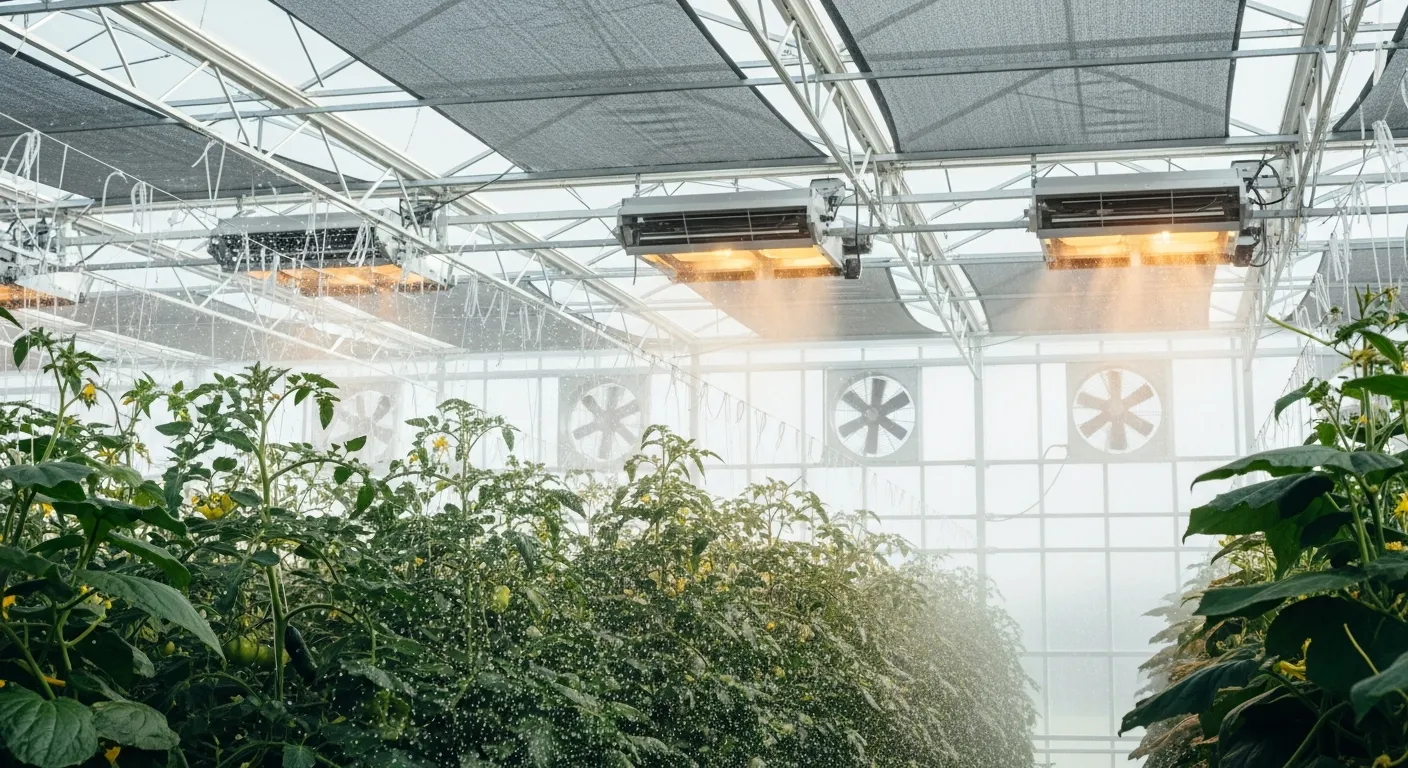
Open roof vents and side vents whenever possible to encourage natural airflow. In larger greenhouses, exhaust fans and intake vents can help create continuous air exchange and prevent humidity from building up. Ventilating during cooler parts of the day can also improve efficiency because outdoor air usually contains less moisture.
Use Circulation Fans
Ventilation removes humid air from the greenhouse, while circulation fans help distribute air more evenly throughout the growing space. Continuous airflow prevents moisture from collecting around leaves and inside dense plant canopies.
Place fans so that air moves gently between plants without creating strong drafts. Good circulation helps dry excess moisture from plant surfaces, reduces stagnant areas, and supports healthier plant growth.
Adjust Watering Practices
Watering management plays an important role in controlling greenhouse humidity. Although plants need sufficient water during hot summer weather, excessive irrigation can increase moisture levels and make humidity harder to control.
Water plants in the morning so excess moisture has time to evaporate during the day. Use irrigation methods that deliver water directly to the roots, such as drip irrigation, and avoid leaving standing water in trays or on greenhouse floors. Allowing the growing medium to dry slightly between waterings can also help reduce unnecessary moisture.
Provide Proper Plant Spacing
Plants naturally release moisture through transpiration, and overcrowded plants can significantly increase humidity inside a greenhouse. Dense foliage also blocks airflow, creating areas where warm, humid air becomes trapped.
Providing enough space between plants allows air to move more freely and helps moisture escape. Regular pruning and removing dead leaves can further improve airflow and reduce the risk of mold and mildew.
Use Shade Cloth
Excessive heat can make humidity management more difficult because higher temperatures increase evaporation and plant transpiration. Installing shade cloth can help reduce heat buildup and create a more stable greenhouse environment.
A properly selected shade cloth can lower temperatures during the hottest part of the day, reduce plant stress, and decrease the amount of moisture released into the air.
Install a Dehumidifier
In areas with high summer humidity, ventilation alone may not be enough. A dehumidifier can help remove excess moisture from the air and maintain more stable humidity levels.
It is especially useful for enclosed greenhouses, humid climates, or spaces with high plant transpiration. Choose a dehumidifier based on your greenhouse size, plant density, and moisture load. A small greenhouse may only need a grow tent dehumidifier, while larger spaces require higher-capacity units.
Monitor Temperature and Humidity
Regular monitoring is essential for effective humidity control. A thermometer and hygrometer allow you to track humidity changes and adjust your setup before problems occur.
Pay attention to both temperature and relative humidity because they work together to influence plant health. Maintaining a balanced environment helps plants absorb water efficiently and reduces stress caused by extreme summer conditions.
Final Thoughts
Lowering greenhouse humidity during hot summer months requires a balanced approach. Improving ventilation, increasing airflow, adjusting watering habits, spacing plants properly, and using a dehumidifier when necessary can all help maintain a healthier growing environment.