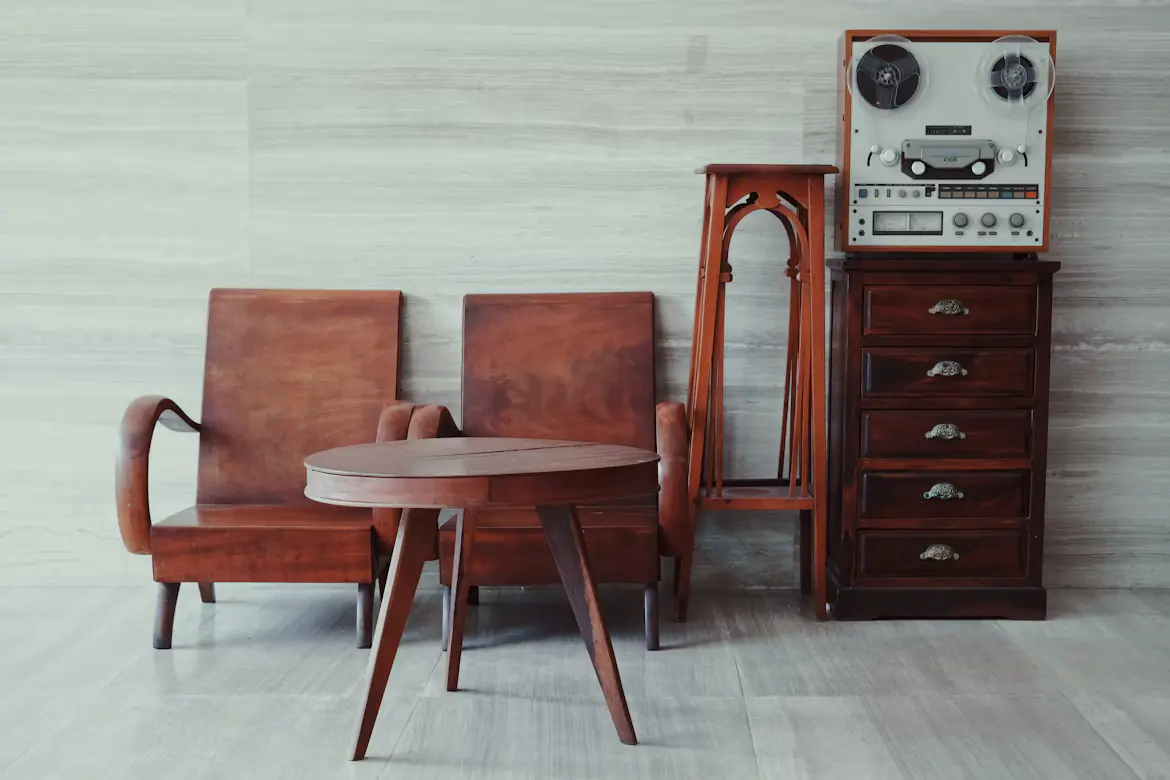
Vintage character gives a modern room depth, warmth and a sense that it developed over time. The most convincing spaces preserve useful original details, introduce older furnishings selectively and leave enough visual breathing room for daily life. You don’t need to recreate a period interior or search for a matching furniture set. A few thoughtful choices can connect different eras while keeping the room comfortable, uncluttered and personal.
Start with Architectural Bones
Look at the elements attached to the room before shopping for furniture. Original trim, interior doors, brickwork and built-in cabinets can establish the vintage character you want. The Secretary of the Interior’s rehabilitation standards encourage retaining distinctive materials where practical, which is a useful principle even when your home has no formal historic status.
Repair solid wood trim and clean old hardware before replacing either one. If a kitchen is part of the project, the decisions involved in keeping mid-century character in a modern kitchen offer a helpful example of preserving personality while improving performance. Fresh paint and updated lighting can then make those original features feel intentional.
The Art of Curated Contrast
Choose one older item to serve as the room’s visual anchor, then build around it with quieter modern pieces. In a living room, that anchor might be a teak credenza, a sculptural lamp or a low-profile lounge chair. A simple sofa and plain rug give the distinctive piece enough room to stand out.
When you’re ready to compare silhouettes, materials and collectible accents, a curated mid century modern living room selection can help you identify forms that suit your existing space. Pay attention to proportions before a particular finish catches your eye. Tape the dimensions of a chair or table onto the floor and leave at least 30 inches for a main walkway. That quick check prevents an attractive vintage find from overwhelming the room.
Balance Warm Woods with Modern Metals
Warm wood and cool metal create an easy bridge between vintage and contemporary design. Walnut, teak and oak bring visible grain and softness, while brushed nickel, chrome and blackened steel add a cleaner edge. Repeat each material at least twice so no finish feels accidental. A walnut sideboard could connect with oak picture frames, while chrome lamp bases echo slim metal legs on a coffee table.
Use restraint when mixing wood tones. Two main tones are usually enough for one room, though a small third tone can appear in an accessory. The wood identification resources from established conservation experts can help when you’re restoring an unlabeled piece. Test cleaners on a hidden area and use coasters, felt pads and shaded placement to protect older surfaces.
Keep the Flow Functional
Arrange the room around the activities that happen there every day. Leave clear paths between doors, seating and storage, then check that tables sit within easy reach. A vintage cabinet may look beautiful in a narrow hall, but it won’t earn its place if its doors block the passage whenever they open.
Modern needs can fit quietly into this layout. Run charging cables behind a console, place a compact power strip inside an open-backed cabinet and use matching boxes to organize remotes or small electronics. In a living room, pull seating a few inches away from the walls to create a more natural conversation area. Avoid filling every empty corner. Open space highlights distinctive shapes and makes a mixed-era room feel calm instead of crowded.
Before adding another decorative object, spend a few days using the room as it stands. You’ll quickly notice where a reading lamp, small table or extra storage would solve a real problem. That pause also keeps the vintage details visible, which is often what gives the finished space its strongest sense of character.