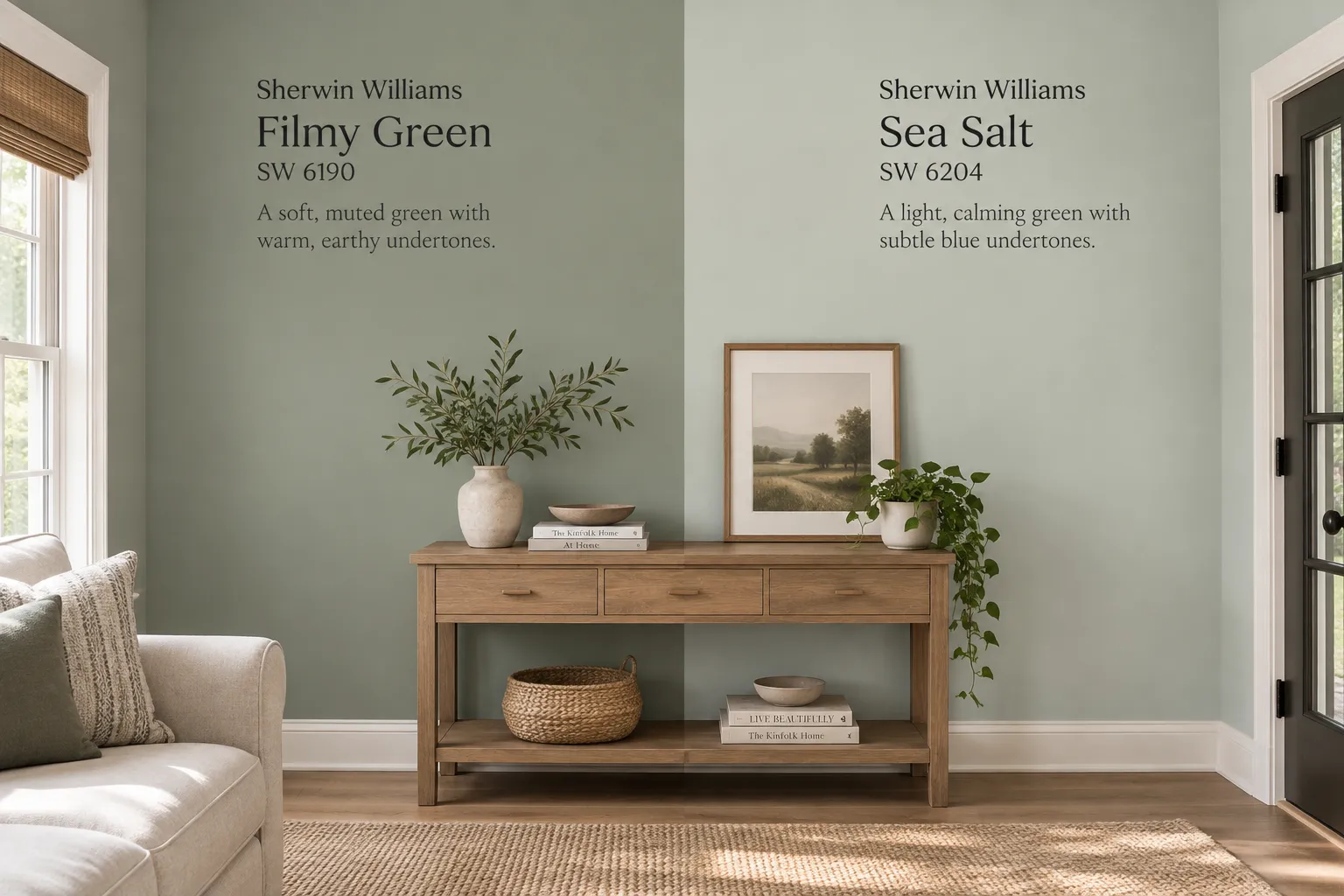
The chip looked like a warm off white under the fluorescent lights at the paint counter. On eleven hundred square feet of siding, in Georgia sun, it read as pale yellow. Not subtly. The neighbor asked whether we had gone with cream.
We had not gone with cream. We had gone with a color that behaves like cream at that scale, in that light, next to that roof, and none of those variables were present in the parking lot where the decision got made.
I have talked to enough people since to know this is close to universal. Exterior color is the single most visible decision on a house and the one made with the worst information.
Why Small Samples Lie
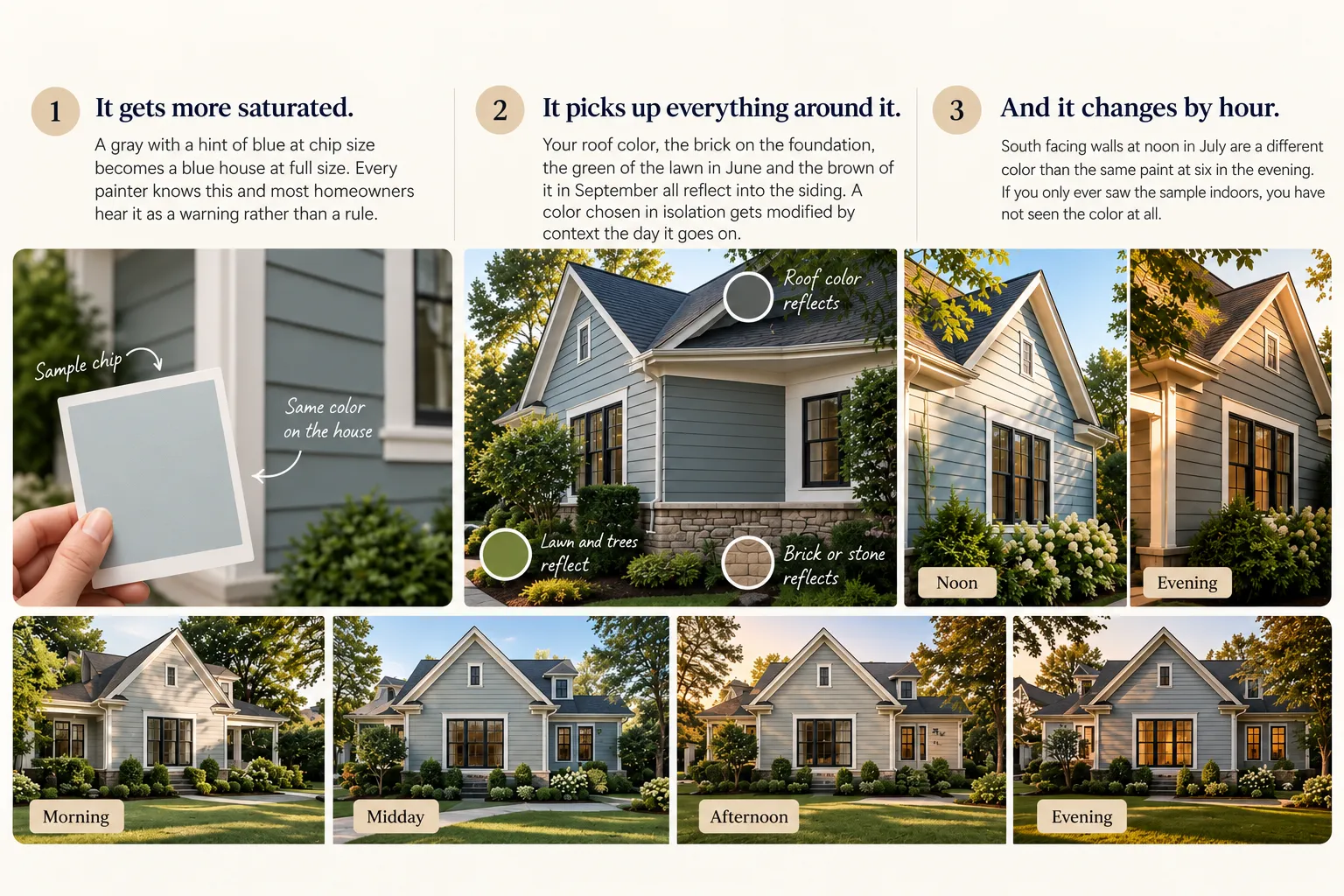
Three things happen when a color gets larger.
It gets more saturated. A gray with a hint of blue at chip size becomes a blue house at full size. Every painter knows this and most homeowners hear it as a warning rather than a rule.
It picks up everything around it. Your roof color, the brick on the foundation, the green of the lawn in June and the brown of it in September all reflect into the siding. A color chosen in isolation gets modified by context the day it goes on.
And it changes by hour. South facing walls at noon in July are a different color than the same paint at six in the evening. If you only ever saw the sample indoors, you have not seen the color at all.
The Sample Board Habit
The improvement most people can make costs about forty dollars.
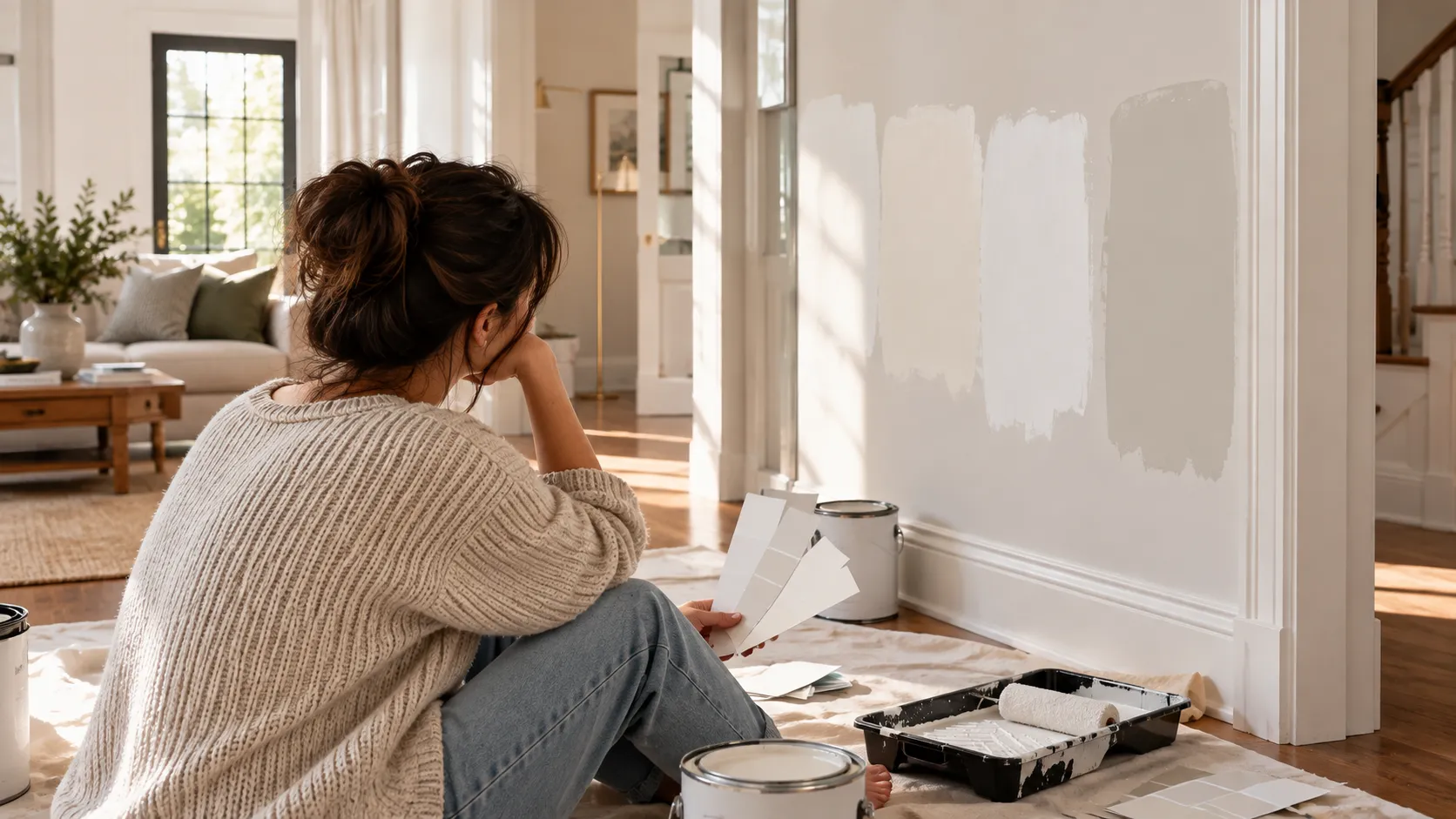
Buy sample pots. Paint two foot squares on poster board rather than on the siding, so you can move them. Put one on each elevation of the house. Look at them in the morning, at midday and at dusk, on a sunny day and an overcast one.
This catches most disasters. It does not catch the effect of the whole house being that color, because two square feet is still not eleven hundred, but it catches the direction of the error.
When the Change is Bigger Than Paint
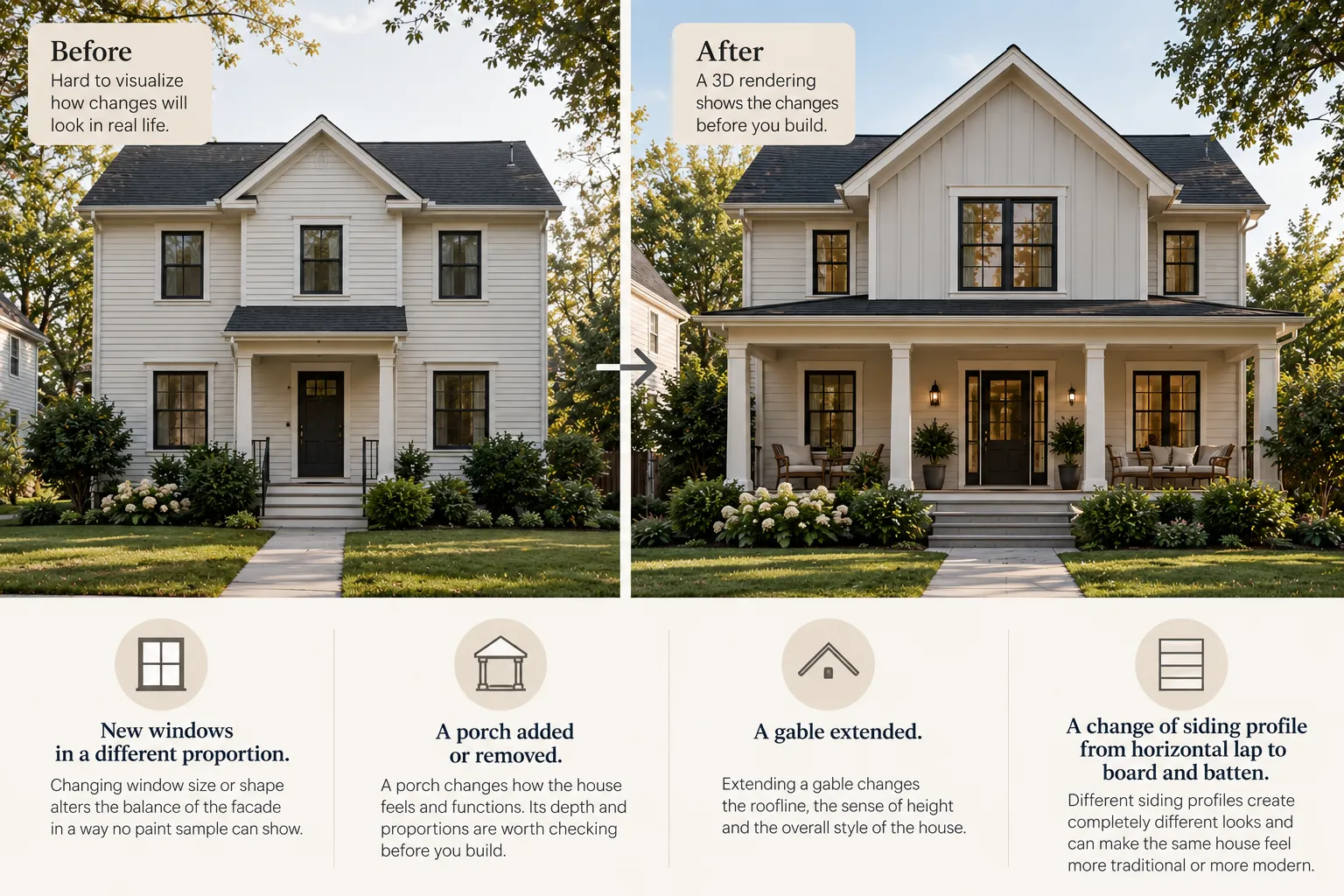
Color is the easy case. The expensive version of this problem is a structural change to the front of the house.
New windows in a different proportion. A porch added or removed. A gable extended. A change of siding profile from horizontal lap to board and batten. These change the face of the house in ways that no sample predicts, and once they are built you are not repainting, you are rebuilding.
This is where a 3D exterior rendering earns its cost on an ordinary house rather than a custom build. The model is built from your measurements, so the proportions are yours, and you can look at the new porch depth from the sidewalk before anybody pours a footing. Porch depth in particular is worth checking. Two feet too shallow and it reads as decoration rather than as somewhere to sit.
The Three Views That Matter on a House
From the street, standing where a visitor would stand. This is the view everyone forms an opinion from and the one people forget to check.
From the driveway at an angle, which is where you see how the roof planes meet. Additions look wrong here first.
From the front door looking out, which is the view you will actually have several times a day and which nobody ever considers until they live with it.
Roofs Are the Decision Under the Decision
Siding color gets discussed for weeks. Roof color gets chosen by whatever the roofer has in stock.
That is backwards. The roof is a larger area, it lasts longer, and it constrains every color that can work beneath it. A warm brown shingle and a cool gray siding fight each other for the life of both.
If you are doing both, pick the roof first and choose paint against an actual sample of the shingle in sunlight. If the roof is staying, bring a shingle to the paint store and put every chip next to it. It feels fussy and it saves the entire exercise.
Landscaping is Not a Finishing Touch
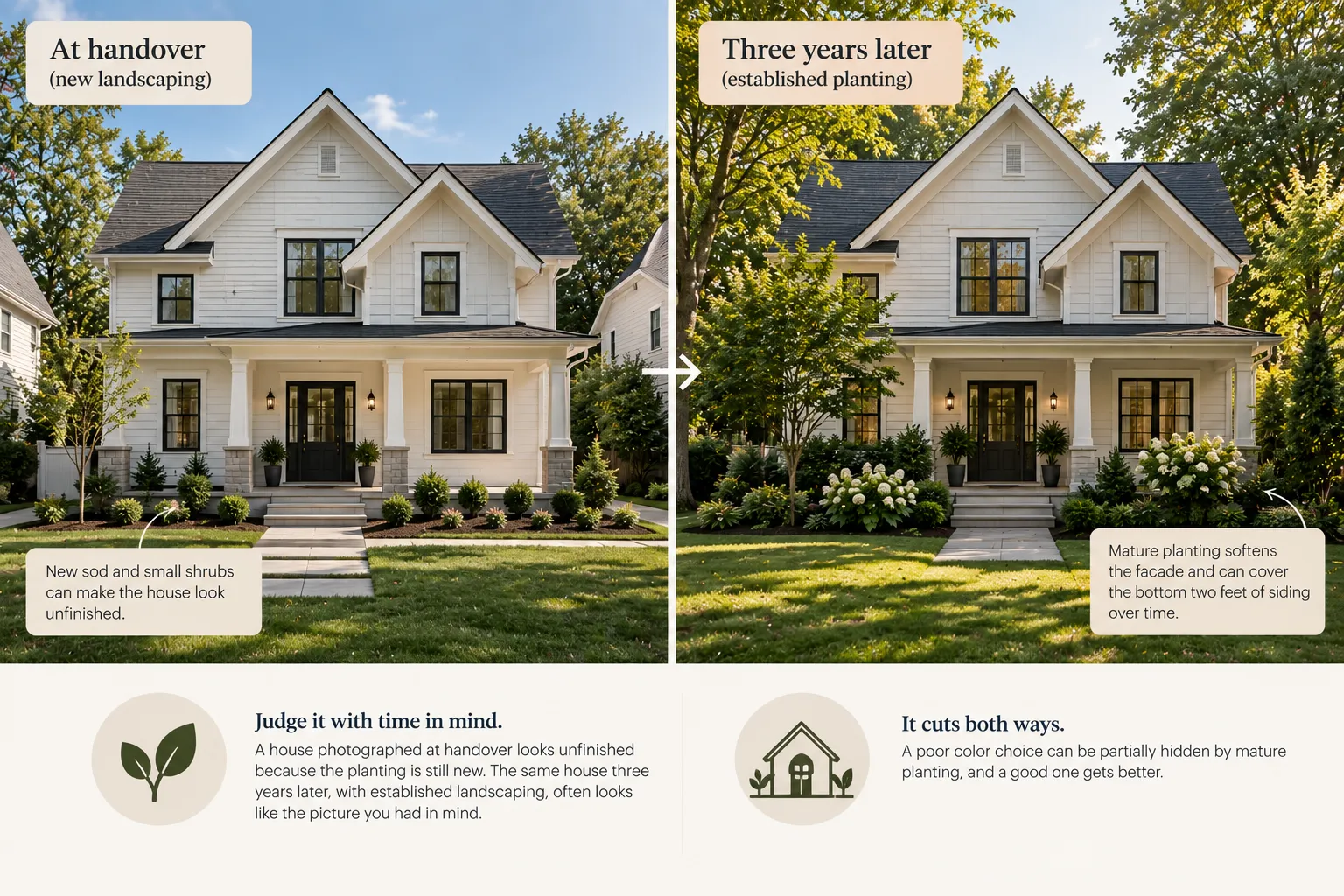
A house photographed at handover, with new sod and eighteen inch shrubs, looks unfinished, because it is.
The same house three years later with established planting looks like the picture you had in mind. If you are judging a color or a facade change, judge it with a mental allowance for what the planting will be doing at maturity, particularly anything evergreen near the foundation that will eventually cover the bottom two feet of siding.
This cuts both ways. A bad color decision is partially hidden by mature planting, and a good one gets better.
What I Would Do Differently
I would have painted the poster boards instead of trusting the chip. I would have looked at them on the actual west wall, at five in the afternoon, which is when that wall is at its most brutal.
For the porch we added later, I would have modeled it first rather than working from a photograph of somebody else's house in a different climate with a different roof pitch. It came out fine, and I still do not know whether fine was luck.
The general lesson is dull and true. Exterior decisions are made at the wrong scale, in the wrong light, next to the wrong things, and almost all of the regret is preventable by making the sample bigger and the context real before committing.