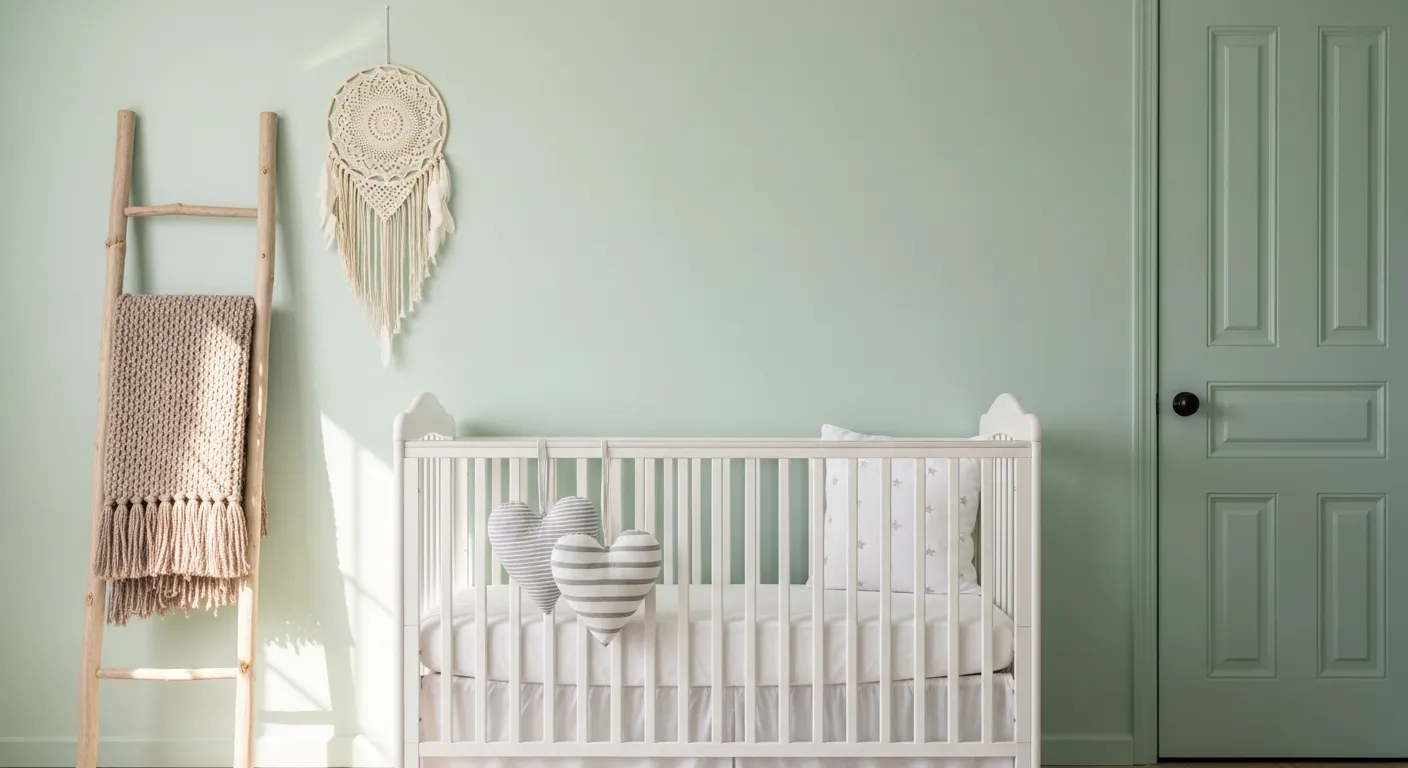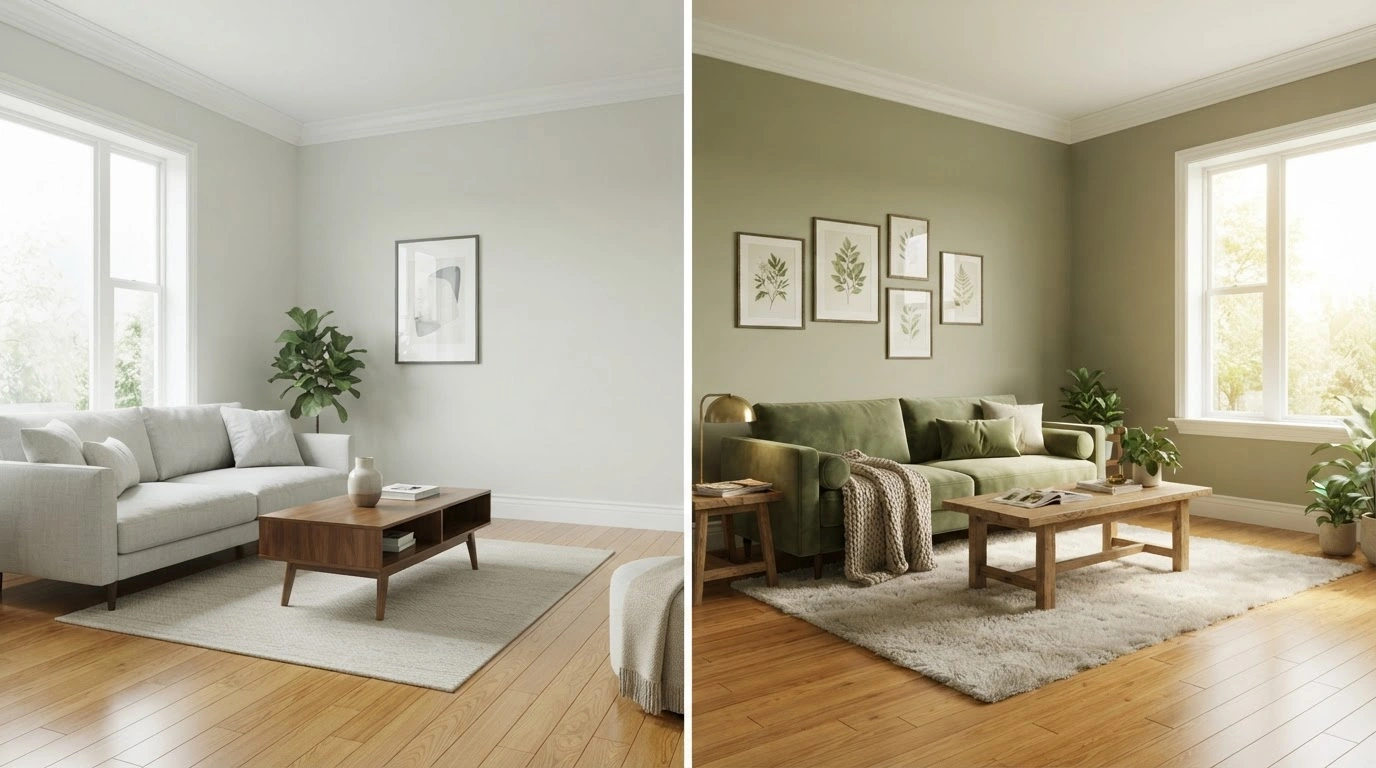
If you are looking for soft colors to give a warm look to your home interior and have been scrolling to know about Filmy Green and Liveable Green, this blog will provide detailed information on both these colors. Both colors are two different hues of Sherwin-Williams' most popular soft greens, and at a glance, they can look nearly identical on the screen. I painted both on sample boards in my own studio to see how they actually look next to natural light, warm wood tones, and white trim, the differences are not easily noticeable, but it can gave an approximate idea of the color impact.
I have already covered Filmy Green in depth and compared it against Sea Salt in an earlier post. This time, we covered the key differences between Filmy Green and Liveable Green, so you can decide which is the right choice for your home.
What is Filmy Green?
Filmy Green (SW 6190) is a soft, gray-leaning green with a hex code of #D1D3C7 and a Light Reflectance Value (LRV) of about 64. That LRV puts it solidly in mid-to-light territory, so it brightens a room without feeling stark. The undertone leans gray and slightly cool, which is why designers often describe it as "quiet" or "foggy" rather than a true green. In dim rooms it can look like sage-gray, while in bright, north-facing light it shows a touch more green.
What is Liveable Green?
Liveable Green (SW 6176) sits right next door on the strip, with a hex code of #CECEBD and an LRV around 61. That's just a few points darker than Filmy Green. Liveable Green carries a touch of saturation and a warmer undertone, which is why Sherwin-Williams featured it as a recent Color of the Month, describing it as "a softer side of nature." It leans more clearly green in daylight and can pick up a warm, almost olive cast under incandescent bulbs.
Filmy Green vs Liveable Green: Key Differences
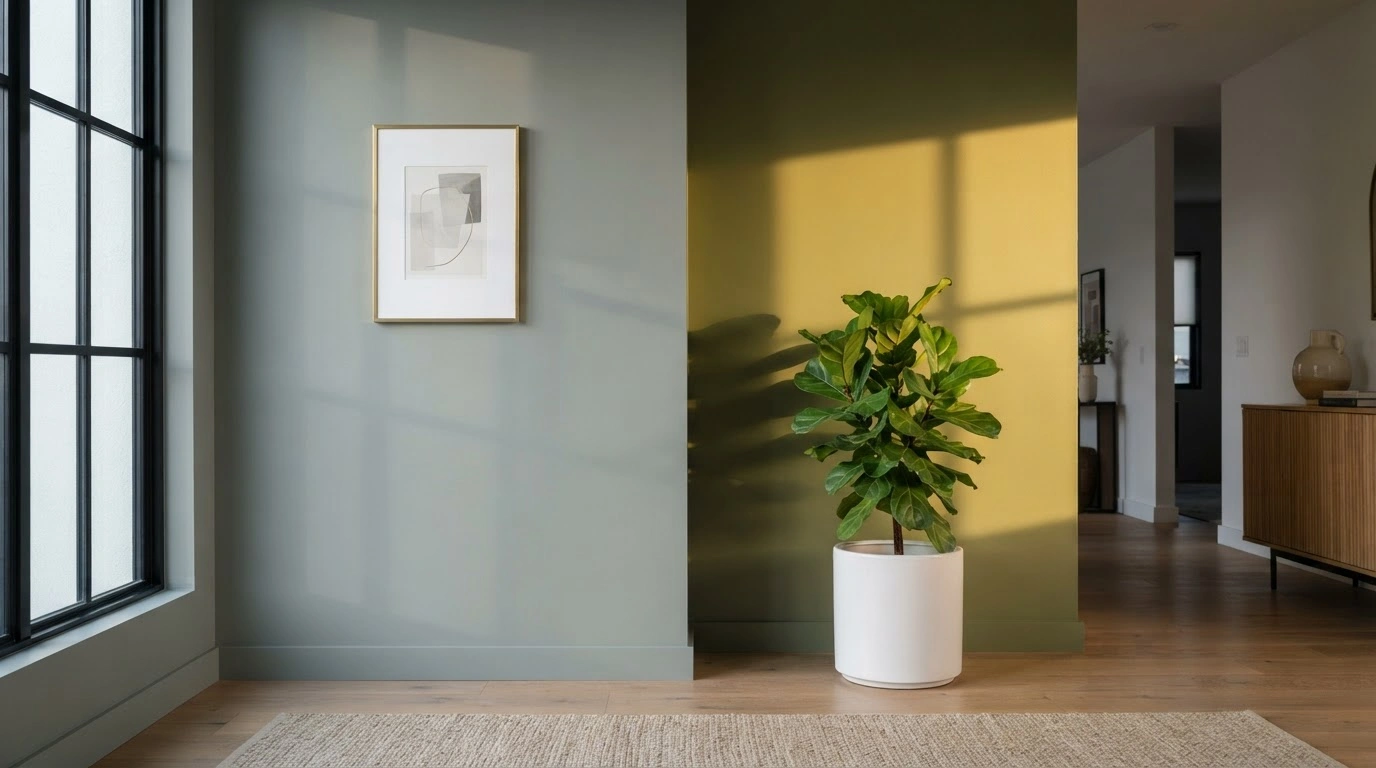
| Feature | Filmy Green (SW 6190) | Liveable Green (SW 6176) |
| Hex Code | #D1D3C7 | #CECEBD |
| LRV | ~64 | ~61 |
| Undertone | Gray, cool-leaning | Warm, slightly olive |
| Saturation | Lower, more muted | Slightly higher, richer |
| Best Light | North or east-facing rooms | South or west-facing rooms |
On paper, a three-point LRV gap and a two-point hue difference sound insignificant. However, practically, Filmy Green is the color you should choose, if you want something that reads as an off-white with a green whisper. Liveable Green is the one to choose if you actually want the room to extend natural green vibes, the moment you walk in. Both hold up well against honey oak floors and white trim, which is part of why they show up so often in the same mood boards.
Where Each Color Works Best?
Filmy Green is often preferred in bathrooms, bedrooms and home offices, or anywhere you want a calm, almost neutral backdrop that won't compete with artwork or bold textiles. It's also a favorite choice for kitchen islands and cabinetry paired with white perimeter cabinets, since its grayed-down base won't compete with stainless steel or brass hardware.
Liveable Green looks better in living rooms, kitchens, and entryways where you want the color to do some visual work. It's a smart pick for rooms that get a lot of afternoon sun because it holds its green identity better in warm, south-facing light. Though, without even natural light in the room to balance the warmth, it can drift toward a muddier olive, so you should be cautious when using it in a windowless powder room.
Colors That Pair Well With Each
Filmy Green plays nicely with Sherwin-Williams Pure White (SW 7005) on trim, Opaline (SW 6189) as a lighter companion, and Parisian Patina (SW 9041) for a tonal, layered look. For contrast, a deep green like Roycroft Bottle Green on a front door or built-in adds drama without competing with the wall color.
Liveable Green pairs well with Extra White (SW 7006) for crisp trim, Software (SW 7074) as a warm gray companion, and Mannered Gold (SW 6130) for brass-and-wood-heavy rooms. Both colors also look intentional next to natural materials, rattan, linen, and unlacquered brass.
Which Should You Choose?
If you're on the fence, let your room's light guide you. Rooms with cooler, indirect light (north-facing bedrooms, hallways without much sun) tend to look best in Filmy Green, since its gray base keeps things calm rather than dull. Rooms that get warm, direct sun for part of the day usually look richer in Liveable Green, which won't wash out the way paler greens can.
| Some Tips | My honest recommendation after observing both: sample them side by side on the same wall, in the same light, for at least 48 hours. These two colors are close enough that undertone shifts from your specific bulbs, flooring, and furniture will matter more than anything written in a paint guide, including this one. |
Final Thoughts
Filmy Green and Liveable Green both prove that "green" doesn't have to always mean bold or leafy. Filmy Green is the quieter, more neutral one; Liveable Green brings a touch of more warmth and confidence. Whichever you choose, pair it with the coordinating colors above and test a large sample before the final painting. And if you're still deciding between greens, our Filmy Green vs Sea Salt comparison is worth a read before you head to the paint counter.