Blackstone griddles are prone to rust if you don't maintain them properly. I used a Blackstone griddle for many years without issues, but a few years later I noticed a layer of rust on the surface. The reason was my ignorance. Then I started compiling data on whether I should keep cooking on the rusty Blackstone griddle or repair or replace it. I concluded that cooking on a rusty surface isn't safe because rust can transfer to food. If the surface has serious corrosion, the layer beneath the metal is damaged, so never cook in that condition. In this blog, I tried to cover the ways to identify the extent of the damage and tips to avoid rusting on the surface.
How Can You Tell If Your Blackstone Is Too Rusty to Use?
Once you analyze the extent of damage to the griddle surface, it’s easy to decide the course of action. Have a look at the distinct indicators and their appropriate solution:
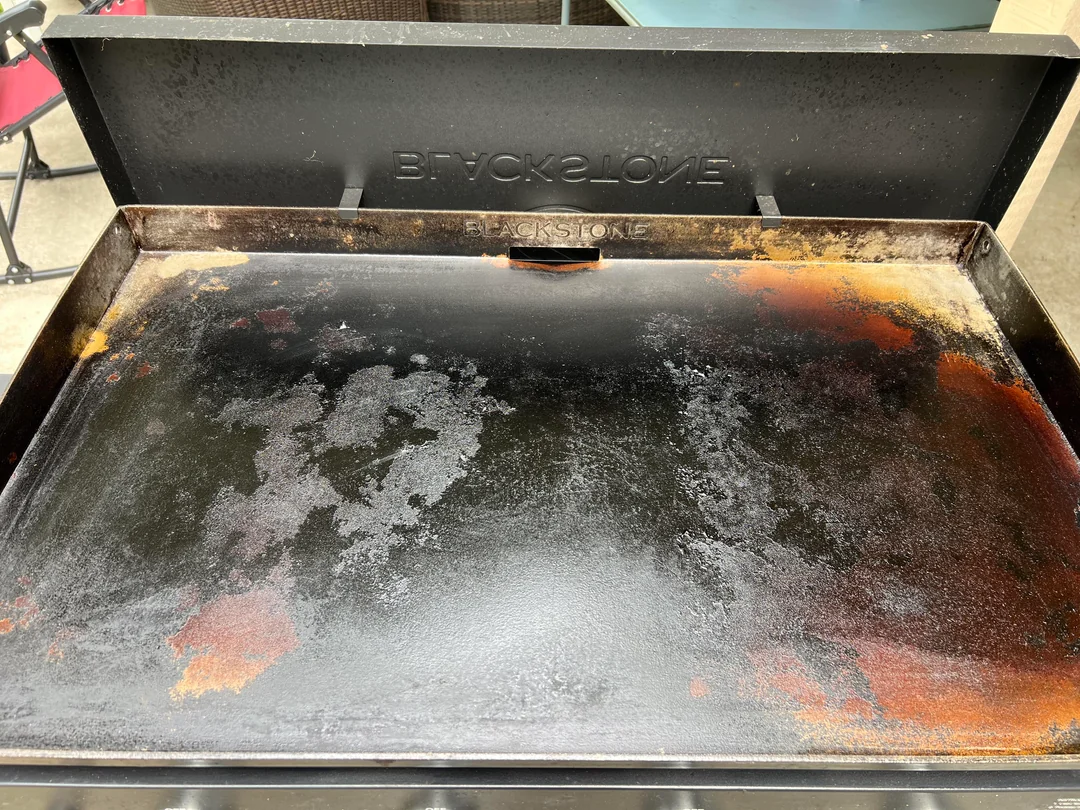
- Light Surface Rust: Small orange or reddish-brown patches indicate early corrosion, and the metal beneath is smooth. In this case, cleaning and reseasoning can help restore the damaged area.
- Widespread Rust: When rust damages a considerable part of the cooking surface, simple cleaning doesn’t help. It needs a more extensive restoration. However, don’t mistake widespread rust for a ruined plate. Once you clean the corrosion, you can better assess the situation.
- Severe Damage: Once you've thoroughly cleaned the surface and notice deep pits, flaking metal, and significant damage, it signals severe corrosion that needs attention.
| Tips | Restoration is a good idea for minor surface rust, but for major damage, consult a professional to decide whether the cooking plate needs to be replaced. |
What Should You Do Before Cooking on a Rusty Blackstone?
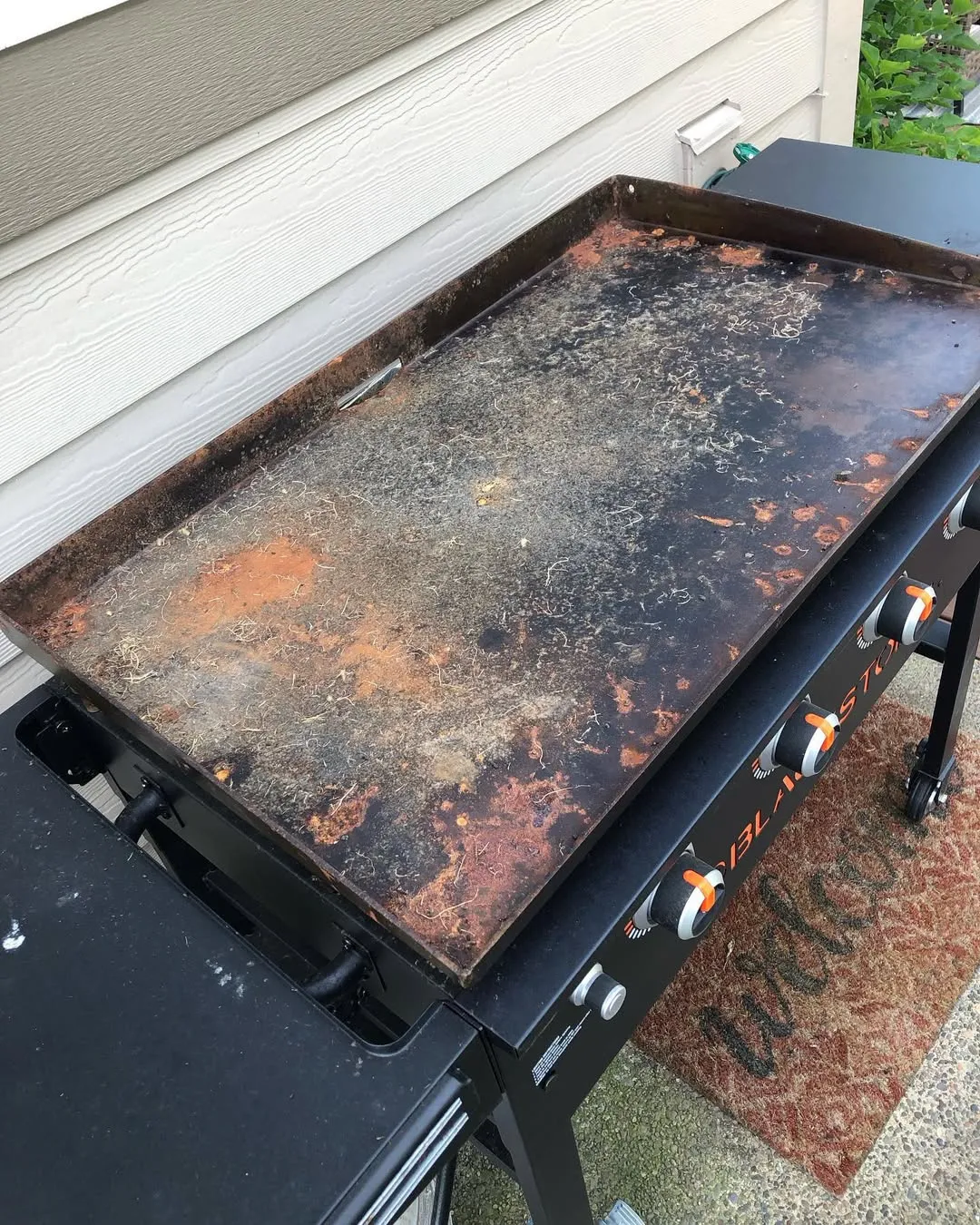
Before cooking on a rusty Blackstone griddle, here is the checklist to follow:
Don’t Cook Until the Surface Is Restored: Put cooking on hold until the surface is restored.
Clean the Rust: Use the right cleaning method, as directed by the manufacturer, to remove the rust.
Clean the Surface Properly: Wipe the surface to remove loosened rust, residue, and debris, ensuring nothing is left on the cooking plate.
Rebuild the Cooking Plate: To reseason the cooking plate, apply cooking oil and follow the manufacturer's seasoning instructions.
Can You Save a Blackstone With Heavy Rust?
Yes, you can surely save a Blackstone with heavy rust. However, remember that visible surface rust is not the real test of the damage on the cooking plate. The amount of corrosion underneath the metal is the true test of whether the cooking plate should be replaced or not.
The reason for rust is often exposure to rain, storage in damp locations, or when the plate is used even before it’s properly dried. Usually, moisture reaches the metal, causing corrosion when the seasoning is damaged. To decide whether the griddle can be saved or not, here are the signs to look for:
- Restoration is possible when the rust comes away and the cooking plate is intact.
- If the metal surface has deep pits, it can make the surface uneven; therefore, restoration isn't possible.
- If the metal's structure seems affected, the damage is more serious than it appears on the surface and can’t be repaired. The signs are flaking metal or thinning of the metal surface.
- If corrosion continues despite cleaning, reseasoning won’t solve the problem.
| Tips | If the cooking plate is damaged, don’t scrap it, the damage can get worse. Contact a professional if you are not sure how bad the damage is. Model-specific technicians can easily determine if the cooking plate can be restored or needs replacement. |
How to Keep Rust From Coming Back?
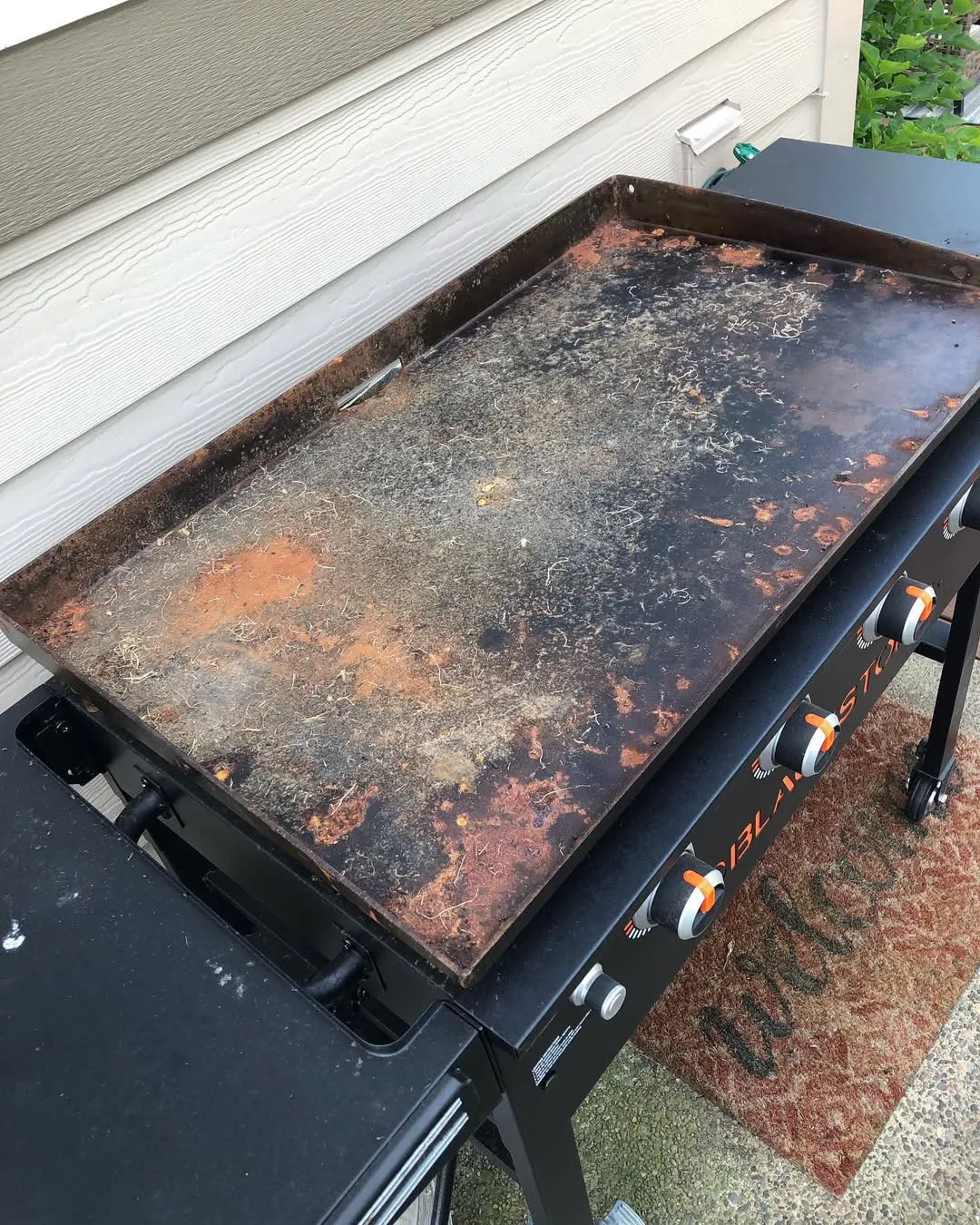
Restoring blackstone griddle is as important as preventing rust from coming back, and here are the tips and tricks:
- Allow the surface to dry completely after cleaning to ensure no moisture is left on the surface, and only then store the griddle.
- Once the surface is cleaned properly, apply a thin layer of cooking oil over the cooking plate to prevent rust formation.
- Proper seasoning forms a protective barrier between the metal and moisture, thus preventing rust.
- Cover the cooking surface of the griddle to avoid exposure to rain, dew, and humidity. This prevents moisture build-up beneath the cover.
- Store the griddle in a dry place.
Final Verdict
A rusty cooking plate is not fit to cook owing to health concerns because the rust can transfer to food. Check the level of damage and take the necessary steps to restore the cooking surface or replace it.