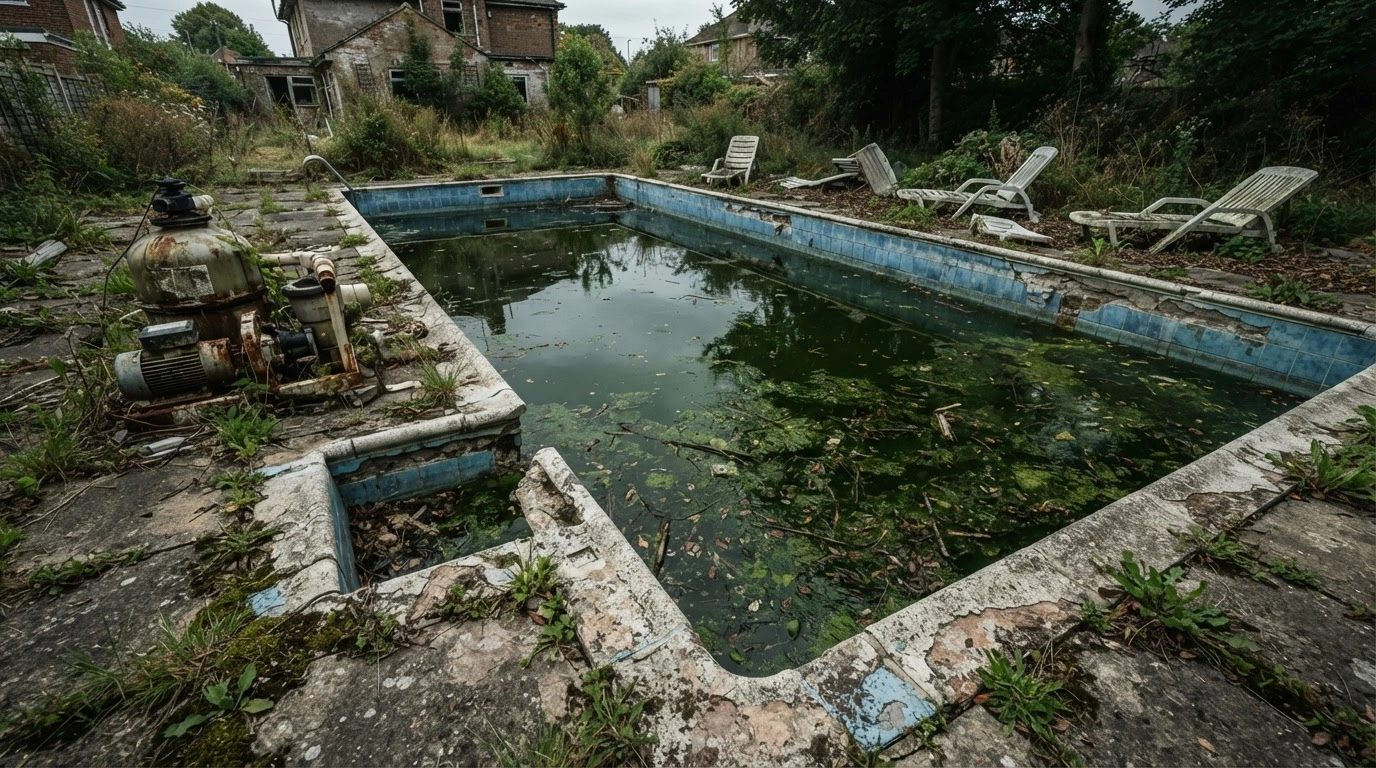
Deferred pool maintenance often turns minor water-quality issues into expensive repairs. A slightly unbalanced reading can damage surfaces, strain equipment, and create conditions that require intensive treatment later. Regular care costs money, but it also keeps predictable expenses from turning into sudden replacement bills. Understanding where neglect causes the most damage can help you protect both the pool and your household budget.
Small Chemical Imbalances Cause Big Damage
Pool water needs the correct balance of pH, alkalinity and calcium hardness. When pH remains too low, the water can corrode metal fittings, damage heaters, and etch plaster. High pH can encourage scale deposits and reduce the effectiveness of sanitizing products. Either condition may leave the water cloudy or uncomfortable.
Test the water at least once a week during swimming season and after heavy rain, extreme heat or unusually high use. Correct small changes promptly instead of adding large amounts of chemicals later. If readings fluctuate despite regular adjustments, a local pool cleaning service can identify possible causes and establish a consistent maintenance routine.
The True Expense of Equipment Burnout
Pumps, filters and heaters work together to circulate and treat pool water. A clogged filter restricts flow, forcing the pump to work harder for longer periods. Low water levels can draw air into the circulation system, while debris in baskets can create similar strain. The resulting repair may cost far more than routine cleaning.
Discussions of neglected pool maintenance often focus on commercial facilities, but the same equipment risks apply to home pools. Even pool placement matters. For example, installing a pool directly on grass without proper ground preparation can introduce additional maintenance challenges. Empty skimmer and pump baskets regularly, monitor the pressure gauge and investigate new noises or leaks quickly. Record the normal filter pressure after cleaning so you can recognize a meaningful increase.
How Staining Degrades Plaster Surfaces
Stains may seem cosmetic at first, yet they often signal a condition that can shorten the life of a plaster finish. Organic debris can leave brown or green marks when leaves sit on steps or the pool floor. Metals in the water may produce rust-colored, dark or blue-green discoloration. Poor chemical balance can also roughen plaster and make future staining easier.
Remove debris before it settles and brush walls, steps and corners each week. If a stain appears, identify its likely source before applying treatment. Using the wrong product can bleach the surrounding finish or make the damage more noticeable. Persistent roughness, scaling or spreading discoloration deserves professional evaluation before resurfacing becomes the only practical option.
Why Routine Sanitation Saves Money
Consistent sanitation prevents algae and microorganisms from taking hold. Once algae spreads across walls and into plumbing, the pool may need repeated chemical treatments, extensive brushing and longer filtration cycles. Severe cases can also require partial draining or specialized cleaning.
Maintain the recommended sanitizer level for your pool system and test more often during hot weather. Keep circulation running long enough to move treated water throughout the pool, including steps and shallow areas. Broader estimates of pool maintenance costs show why recurring care should be part of a household budget. A fixed monthly allowance for testing supplies, cleaning and minor service helps prevent sanitation work from being postponed.
Creating a Realistic Preventive Schedule
A useful schedule should reflect the pool’s size, surrounding vegetation, weather and frequency of use. Weekly tasks generally include testing the water, emptying baskets, brushing surfaces and checking the water level. Vacuuming may be needed weekly or whenever visible debris collects.
Each month, inspect accessible fittings for leaks and compare filter pressure with its clean baseline. Clean or service the filter according to its type and the manufacturer’s instructions. Seasonal appointments can cover equipment inspections, deeper cleaning and changes in operating time. Keep test results, chemical additions and repair dates in one notebook or digital file. Those records reveal patterns, such as rising pressure or repeated pH changes, before they become costly failures.
Preventive care works best when it becomes part of the pool’s normal operating cost. Put recurring tasks on a calendar and leave room in the budget for small corrections. A ten-minute inspection that catches a blocked basket, falling water level or new stain can prevent weeks of cleanup and an unexpected equipment bill.