How often should you actually soft wash your home's exterior? In damp climates such as Eugene, Oregon, moisture, shade, algae, and organic buildup can accumulate faster than homeowners realize, gradually affecting the appearance of siding and other exterior surfaces. Waiting until the buildup becomes obvious may mean the home has already gone too long between cleanings.
At the same time, cleaning more often than necessary can be an unnecessary expense. Finding the right schedule depends on factors such as your local climate, the amount of shade your home receives, the type of siding, and how quickly buildup returns.
Why Exterior Surfaces Attract Growth in the First Place
It helps to understand the basic conditions that actually allow mold, mildew, and algae to take hold on a home's exterior. According to the U.S. Environmental Protection Agency, mold growth on surfaces requires four specific conditions to occur: a temperature range above 40°F and below 100°F, mold spores, a nutrient base, and moisture, and the agency notes that spores are almost always present in outdoor air, while dirt on surfaces provides additional nutrients that support growth.
That combination matters because it explains why exterior surfaces are genuinely vulnerable almost by default. A home's siding, roof, and walkways sit outdoors, exposed to spores in the air and dirt that accumulates naturally, which means moisture from rain, humidity, or shade is often the only missing ingredient standing between a clean exterior and one developing visible growth.
Once that moisture is consistently present, whether from a wet climate, heavy shade, or a sprinkler that hits the same wall every day, growth has essentially everything it needs to establish itself and spread.
What Actually Determines How Often You Need It
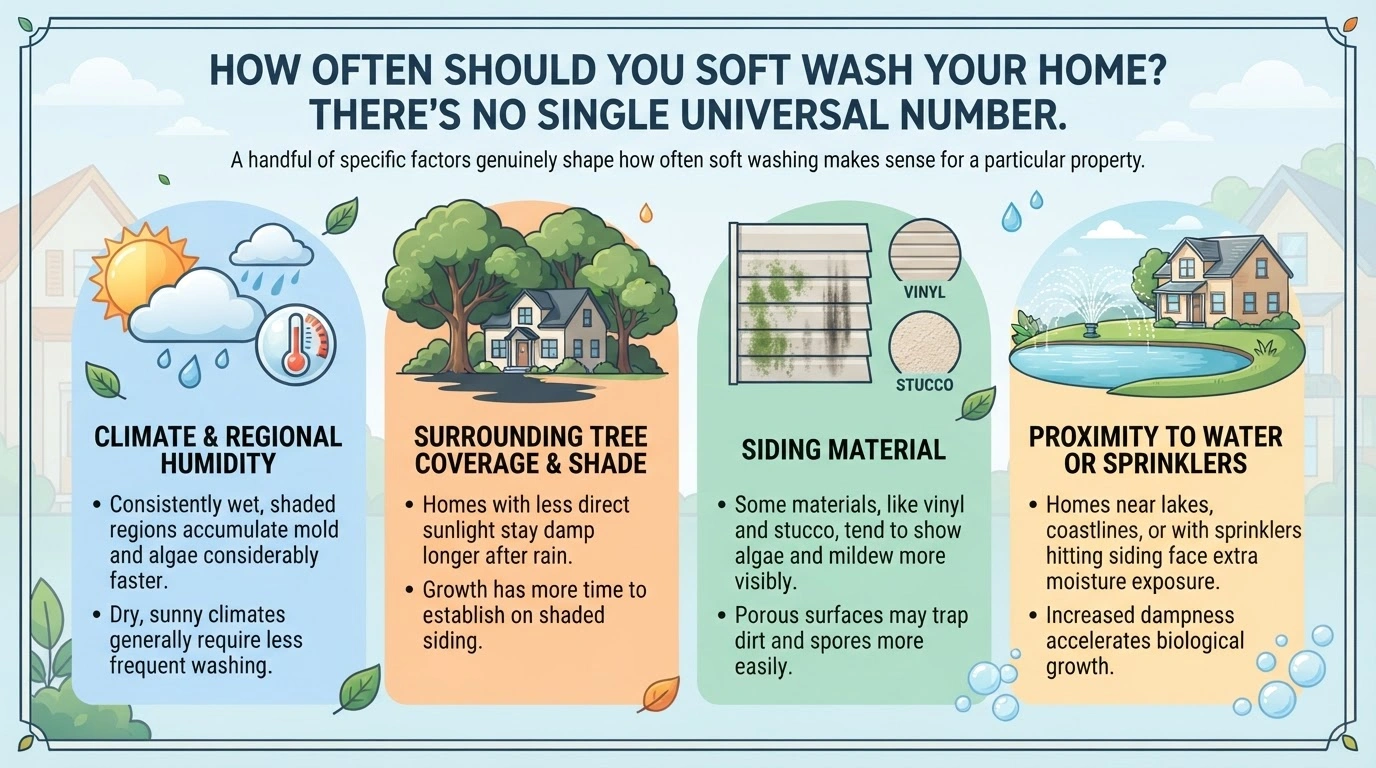
This is really the heart of the question, and the honest answer is that there's no single universal number that applies to every home. A handful of specific factors genuinely shape how often soft washing makes sense for a particular property:
- Climate and regional humidity, since consistently wet, shaded regions accumulate mold and algae considerably faster than dry, sunny ones
- Surrounding tree coverage and shade, as homes with less direct sunlight stay damp longer after rain, giving growth more time to establish
- Siding material, since some materials, like vinyl and stucco, tend to show algae and mildew more visibly than others
- Proximity to water or sprinklers, as homes near lakes, coastlines, or with sprinkler systems that regularly hit the siding face extra moisture exposure
Weighing these four factors together, rather than picking an arbitrary interval, is really what determines whether a specific home genuinely needs cleaning every year or can comfortably go closer to two.
The General Timeline Most Homes Actually Fall Into
For most homes, cleaning every 12 to 24 months offers a practical balance. Humid or heavily shaded properties may need more frequent cleaning, while dry, sunny locations can often go closer to 24 months. Changes such as added landscaping or increased shade from mature trees may also mean cleaning the exterior sooner.
Working with an experienced provider like Soft Wash Pros helps take the guesswork out of this timeline for a specific property. They inspect a home directly and recommend a cleaning schedule based on its actual condition, siding material, and regional exposure, rather than applying a generic, one-size-fits-all interval that might leave a genuinely humid property under-cleaned or an already well-protected one washed more often than it actually needs.
That kind of tailored recommendation, based on an actual inspection rather than a blanket rule, tends to serve a home's specific situation far better than guessing.
Signs Your Home Is Overdue, Regardless of the Calendar
Beyond a general timeline, a handful of visible signs suggest a home genuinely needs attention sooner rather than later:
- Visible green, black, or dark streaking on siding, especially on north-facing or shaded walls
- A noticeably dingy or dull appearance compared to how the exterior looked when it was last cleaned
- Moss or algae buildup on the roof, particularly in valleys or shaded sections
- Slippery, discolored walkways, driveways, or decking, often the first place buildup becomes genuinely noticeable
Spotting even one of these signs is usually a stronger indicator than the calendar alone, since two similar homes on the same street can genuinely need cleaning at very different intervals depending on their specific exposure.
Why Soft Washing Specifically, Rather Than Pressure Washing
It's worth understanding why soft washing has become the preferred method for most home exteriors rather than traditional high-pressure washing. Pressure washing relies on forceful water alone, which can strip paint, damage siding, and force water behind materials where it doesn't belong. Soft washing instead uses low pressure combined with specialized cleaning solutions that actually kill mold, mildew, and algae at the surface, rather than just blasting away what's visible while leaving the underlying growth to return within weeks.
That distinction matters directly for how often cleaning is actually needed, since a soft wash that kills growth at the root tends to keep a home looking clean considerably longer than a pressure wash that only removes what's visible on the surface.
Why Waiting Too Long Actually Costs More
Delaying an overdue soft wash doesn't just mean living with a less attractive exterior in the meantime, it can genuinely shorten the lifespan of the materials themselves. Algae and mold left unaddressed can gradually degrade paint, siding, and roofing materials over time, turning what would have been a routine, affordable cleaning into a more expensive repair or replacement project down the line. A roof left with untreated moss for several years, for example, can develop actual damage to shingles that a timely cleaning would have prevented entirely, turning a maintenance task into a genuine repair bill.
Conclusion
How often you should really soft wash your home's exterior comes down to your specific climate, shade coverage, siding material, and how quickly visible signs of buildup actually show up on your particular property, generally somewhere between 12 and 24 months for most homes.
Given how much moisture and organic buildup can quietly affect both curb appeal and the long-term condition of a home's exterior materials, working with an experienced provider to establish the right schedule for your specific situation is one of the most practical, cost-effective steps any homeowner can take to protect their investment.