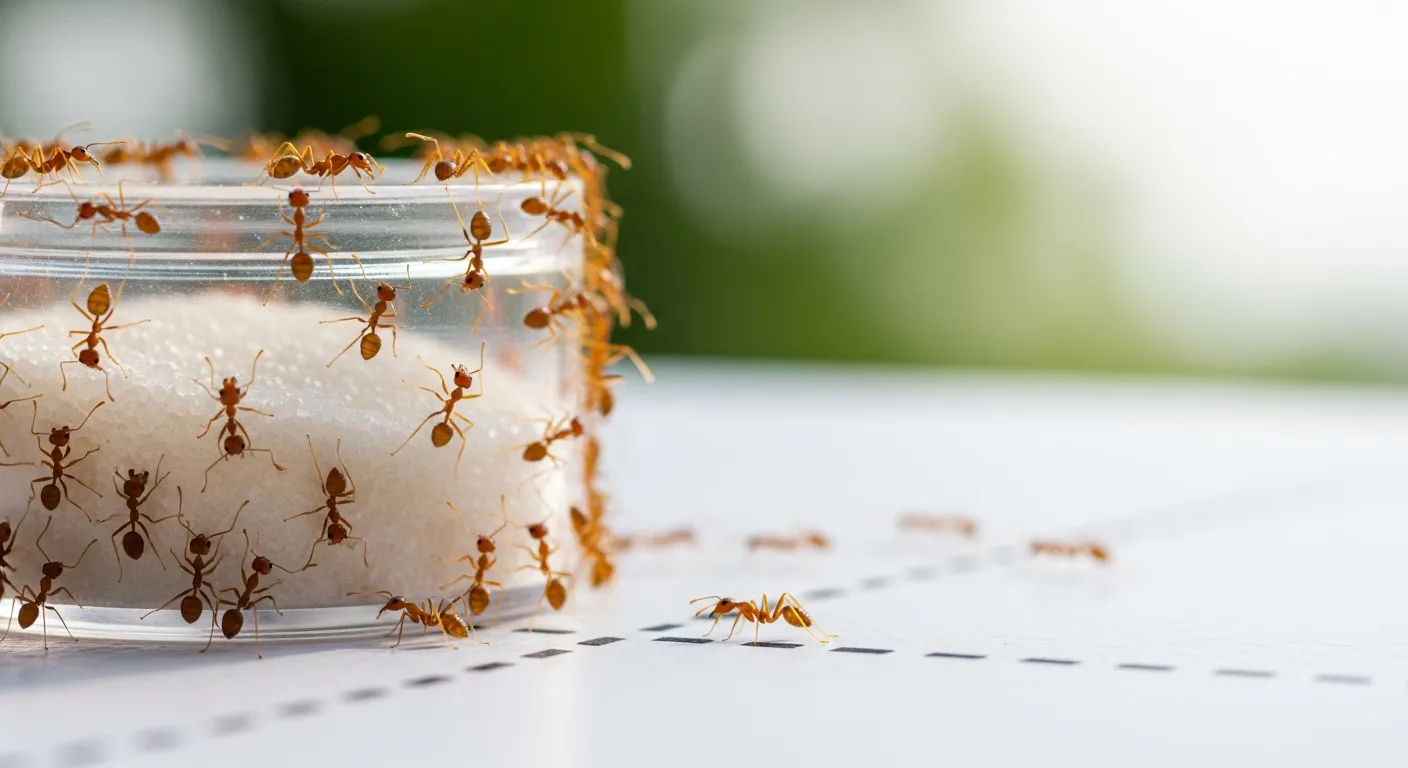
Ants in the house are a highly unpleasant and annoying sight for most of the homeowners. The main reason for ants' infiltration into your homes is their search for food, water, and shelter. Hence, if you remove all the sources of food and water, their entry can be prevented. Though there are store-bought ant killers that contain chemicals , many homeowners prefer DIY ant traps. This is because chemicals may cause damage to pets and kids, and it is more expensive than homemade traps. This blog mainly focuses on homemade ant traps and other preventive ideas to keep ants at bay.
How to Prepare a Homemade Ant Trap?
There are a few ways to prepare the natural bait for ants. Here are some:
Mixture of Baking Soda and Powdered Sugar

Ingredients Required:
-
Baking soda
-
Powdered sugar
-
A container or a jar lid to hold the bait
-
A spoon for measurement
Steps to Prepare Bait:
-
Mix one part of powdered sugar and one part of baking soda in the jar lid or any container to make the bait.
-
The next step is to place the bait strategically along the areas where ants can be seen active and see how baking soda works. Bait can be placed in infested areas either in the jar lid or directly on the surface.
DIY Ant Trap Using Borax and Sugar

This is also a natural method to get rid of ants. The most common ant type to invade homes is “pavement ants and carpenter ants”. The following bait is highly effective in controlling the invasion of carpenter ants.
Ingredients Required:
-
Borax
-
Sugar
-
Peanut butter or protein powder
-
An eye dropper
-
The cap of a milk jug or a container
Steps to Prepare Bait:
-
Combine three parts of sugar with one part of borax. Add one part of water to make a syrup-like consistency. To make bait more attractive to ants, add a bit of peanut butter or protein powder.
-
Using a dropper, pour liquid bait into the milk jar cap or a small container.
-
At this step, place liquid bait in the areas where ants can be seen active. Such areas can be near cracks or corners that also give them easy entry to homes.
-
Finally, it’s time to wait patiently for results. This trap may dry in a couple of days, so add a few drops of water to the cap. This will rehydrate the sugar and borax solution that can be used again in the infested area.
| Some Tips | In case you have kids and pets at home, place bait in areas where kids and pets can’t reach or spot. Though borax is not life-threatening for pets, it can lead to stomach upset and even damage to the kidneys in pets if ingested. |
How to Prevent Ants in Different Parts of the Home?

“Prevention is better than cure” is the best way to avoid further issues; it should be implemented to keep ants away from your home. Here are the preventive ideas:
Cleaning
The kitchen is one of the vulnerable spots where ants invade in search of food. Hence, clean kitchen surfaces regularly, wipe up spills promptly, store food in sealed containers, and remove crumbs from floors and countertops.
If you are dealing specifically with sugar ants, you can also learn how to get rid of sugar ants for more targeted information about identifying and managing these small household ants.
Seal All the Entry Points
Cracks and crevices are the biggest source of entry points for ants. Therefore, fill all such points with borax or diatomaceous earth and seal them with caulk.
Sprinkle Lime to Create a Border Around the Exterior of the Home
As lime contains natural calcium hydroxide, it can be used along the base of the foundation. Ants usually avoid such areas.
How to Disrupt Scented Trails of Pheromones Left Behind by Ants?
Worker ants can follow pheromone trails left by other ants to locate food sources. Cleaning visible trails can therefore help remove the scent cues that guide ants back to the same location.
Wipe affected surfaces with an appropriate household cleaner and remove food residue. You can also use a vacuum to remove visible ants and debris. If ants continue appearing from the same location, look for the entry point or possible nesting area instead of relying only on surface cleaning.
If you're dealing with other household pests at the same time, resources explaining floor bugs can help you distinguish ants from other crawling insects before choosing a treatment.
Conclusion
Homemade ant bait is one option some homeowners consider when dealing with minor ant activity, but DIY does not automatically mean harmless. Ingredients such as borax require particular caution around children and pets, and homemade methods may not work equally well for every ant species.
Cleaning food residue, controlling moisture, sealing entry points, and removing pheromone trails are important parts of prevention. For persistent infestations, correctly identifying the ant species and using appropriately labeled pest-control products can provide a more targeted approach.
If cockroaches are also a problem in your home, you can read how to get rid of roaches in an apartment for information on managing that separate pest issue.