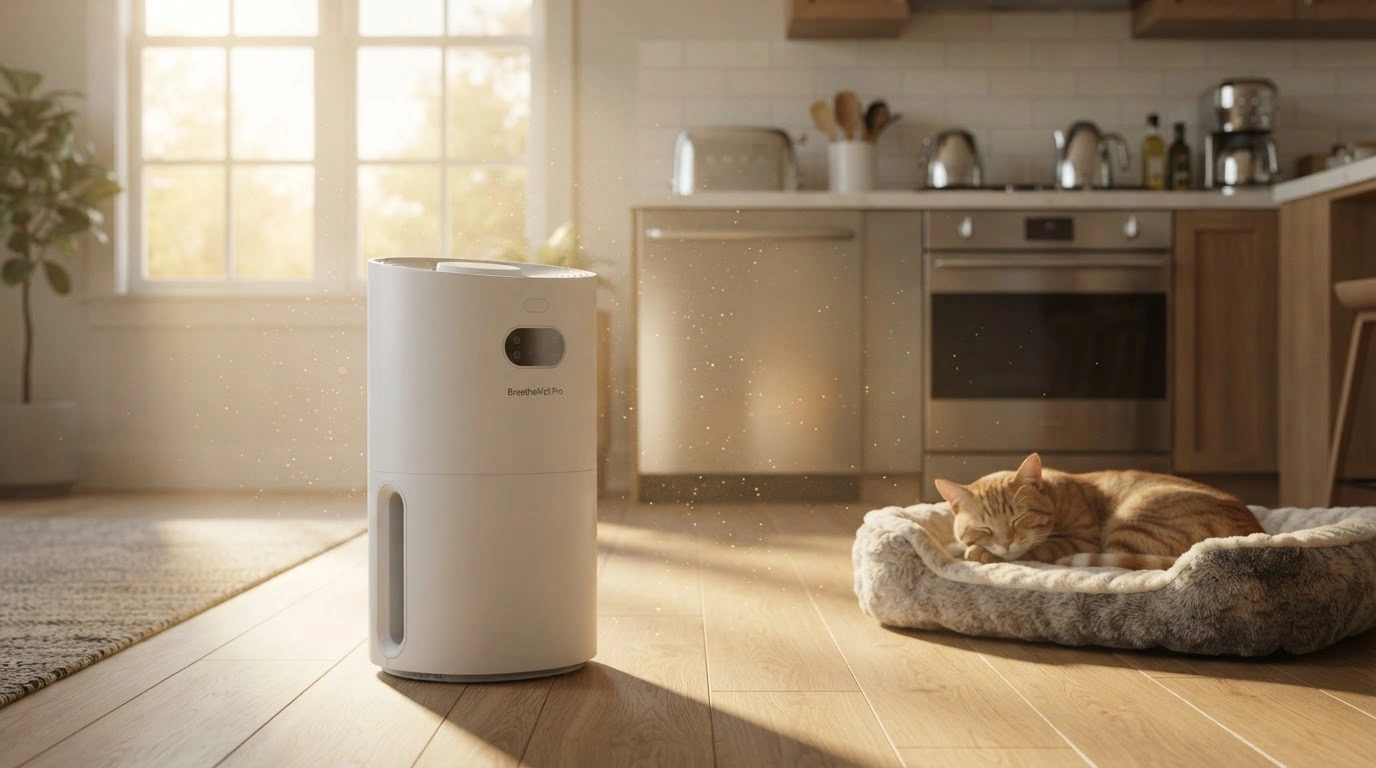
You vacuum on Saturday, and by Tuesday there's a gray film on the TV stand again. The dog has napped on the couch, someone seared salmon for dinner, and the whole house smells like both.
Cleaning resets a room, but it can't keep up with what floats through the air in the days after. A multi-stage air purifier pulls dust, dander and smell molecules out of the room while you get on with your week.
Why Dust Comes Back So Fast
A lot of household dust starts out airborne. Skin flakes, pet dander, lint from towels and couch cushions, and fine dirt tracked in on shoes all drift around for a while before they land.
Every time you walk across a rug, fluff a pillow or the HVAC kicks on, some of that settled dust lifts back into the air. Dusting with a dry cloth can do the same thing, which is why a shelf you wiped down looks dull again two days later.
An air purifier catches some of those particles while they're still in the air, before they settle on furniture. You'll still dust, but the film builds more slowly.
What "Multi-Stage" Means
A multi-stage purifier runs air through more than one filter, each built for a different job. Most home units include some combination of these:
- Pre-filter: a coarse mesh that traps pet hair, lint and larger dust so the finer filters behind it don't clog as quickly.
- HEPA filter: dense, pleated media that captures very fine particles, including dust, pollen and pet dander.
- Activated carbon filter: a bed of porous carbon that holds onto odor molecules and some household chemical vapors as air passes through.
- Extra stages: some models add UV light or ionization, which manufacturers market for germs and odors.
You want more than one stage because particles and smells behave differently. A HEPA filter is made for solid particles. Odors are gases, and they pass through HEPA media mostly untouched, so the carbon filter has to catch them.
Pet Odors: Dander and Smell Are Two Different Problems
If you share your home with a dog or cat, you're dealing with two things at once. Dander and loose hair are particles. The "dog smell" in the living room is mostly gas coming off fur, bedding and the occasional accident.
The pre-filter and HEPA stages take care of the hair and dander floating around. The carbon stage works on the smell. A purifier with HEPA alone will make a dent in the dust around the pet bed and do very little for the odor.
A few habits help the purifier keep up:
- Wash pet bedding and throw blankets every week or two, since fabric holds a smell long after the air clears.
- Set the purifier up in the room where your pet sleeps.
- Clean up accidents with an enzyme cleaner. No air filter will fix a smell soaked into carpet padding.
Cooking Smells and Kitchen Grease
Frying, searing and roasting send a mix of smoke, grease droplets and odor into the air. Start with your range hood: turn it on before the pan gets hot and leave it running for a while after you're done.
A purifier set up nearby picks up what the hood misses, especially in open floor plans where the smell from dinner drifts into the living room. Carbon does most of the work on the lingering smell of fish, garlic or bacon.
Keep the unit a few feet away from the stove. Grease spatter clogs filters quickly, and a coated pre-filter cuts airflow to every filter behind it.
Choosing a Purifier for Your Space
Start with the size of the room. Purifiers are rated for a square footage or carry a CADR (clean air delivery rate) number, and a unit that's too small will run constantly without making much difference. If you're between sizes, go one size up.
Then look at what's inside:
- A true HEPA filter for dust and dander
- A carbon filter with some real weight to it if odors are your main concern, since a thin carbon-dusted sheet runs out quickly
- Replacement filters that are easy to find and priced so you'll change them on time
Some brands put several of these stages into a single housing. Air Oasis, for example, makes purifiers that pair HEPA and carbon filtration with UV light, so dust and odors are handled by one machine.
Noise counts too, since a purifier only helps while it's on. If it's going in a bedroom, check the decibel rating on the low setting.
Getting the Most From It Between Cleanings
Leave it running on low or auto all day. Steady filtering keeps dust from piling up, and a unit that's already on clears a burst of cooking smell faster than one you switch on after the fact.
Give it room to breathe. Pulling it a foot or so away from walls and furniture lets air move freely in and out. When you can, keep the door closed in the room you're treating.
Change filters on schedule. A loaded HEPA filter slows airflow, and spent carbon stops absorbing odors, often well before it looks dirty. Rinse or vacuum the pre-filter every few weeks, more often in a house with shedding pets.
Fewer Smells and Slower Dust Between Cleanings
A multi-stage air purifier won't replace vacuuming, washing the dog bed or wiping down the stovetop. It changes the days in between: less gray film on the shelves, a living room that doesn't smell like last night's salmon, and pet odors that fade instead of settling in.
Pick a unit sized for your room with both HEPA and carbon stages, put it where the dust and smells start, and keep fresh filters on hand.