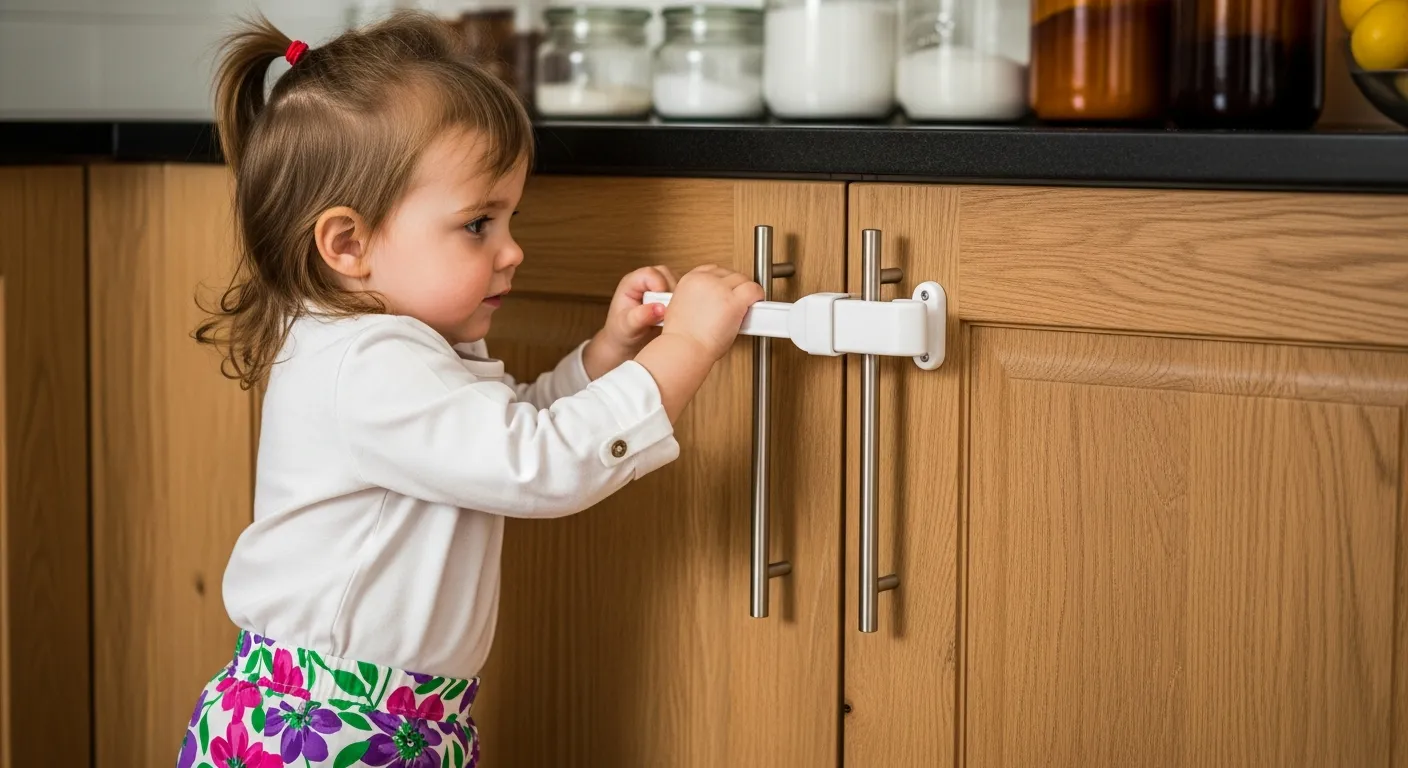
Babies bring immense joy to parents' lives. It’s fascinating to see them being mischievous. If you have a baby who has just learned to walk and is starting to explore different areas of the house, it’s time to be vigilant. This is because these little munchkins even reach the kitchen and try opening the cabinets. Hence, installing childproof kitchen cabinets is essential to avoid accidents. This blog covers different types of childproof cabinets and related aspects.
Why Childproofing Kitchen Cabinets is Important?
Toddlers and young children have curious minds, so they try to open kitchen cabinets to see what's inside. These cabinets are used to store various materials, such as detergent, knives, and other kitchen supplies, which could be dangerous for kids. Here is the list of reasons in detail.
Protection Against Hazardous Substances
Lower kitchen cabinets are often used to store daily-use items such as cleaning supplies, detergents, and chemicals, which can pose a threat to kids because they are poisonous.
Save Kids From Sharp Objects
Sharp objects stored in the kitchen cabinets, such as knives, scissors, and other gadgets, can cause severe injury to kids.
Avoid Minor Accidents
There are heavy and breakable items in the cabinets, like pots, pans, and glassware, that can be pulled down by kids, resulting in minor accidents.
Prevent Finger Injuries
The risk of finger injury is high because toddlers often slam cabinet doors.
Common Kitchen Cabinet Hazards for Children
- Kids who try to access cabinets without supervision are more likely to come into contact with cleaning products, sharp utensils, heavy cookware, glass containers, and small choking hazards.
- Apart from these exposures, children also harm themselves from chemical poisoning from dark colored detergent, cuts from knives and scissors, and burns from lighters or matches.
- Children can hurt their fingers while opening the cabinet door. If cabinet drawers are open, kids tend to climb, leading to accidental falls and severe head injuries.
Mistakes to Avoid When Childproofing Kitchen Cabinets
Despite giving your best efforts to childproof kitchen cabinets, the chances of committing mistakes in the process can’t be ruled out. Here are the commonly made mistakes you can avoid:
- Don’t focus solely on locking the cabinet under the sink, because other drawers may contain knives, medicines, or other choking hazards. Hence, check all drawers and cabinets, then lock.
- Don’t rush when installing the adhesive locks, as grease, dust, moisture, or insufficient curing time can significantly affect performance. Therefore, press adhesives firmly and cure as instructed. Also, keep an eye on the performance regularly.
Best Ways to Childproof Kitchen Cabinets
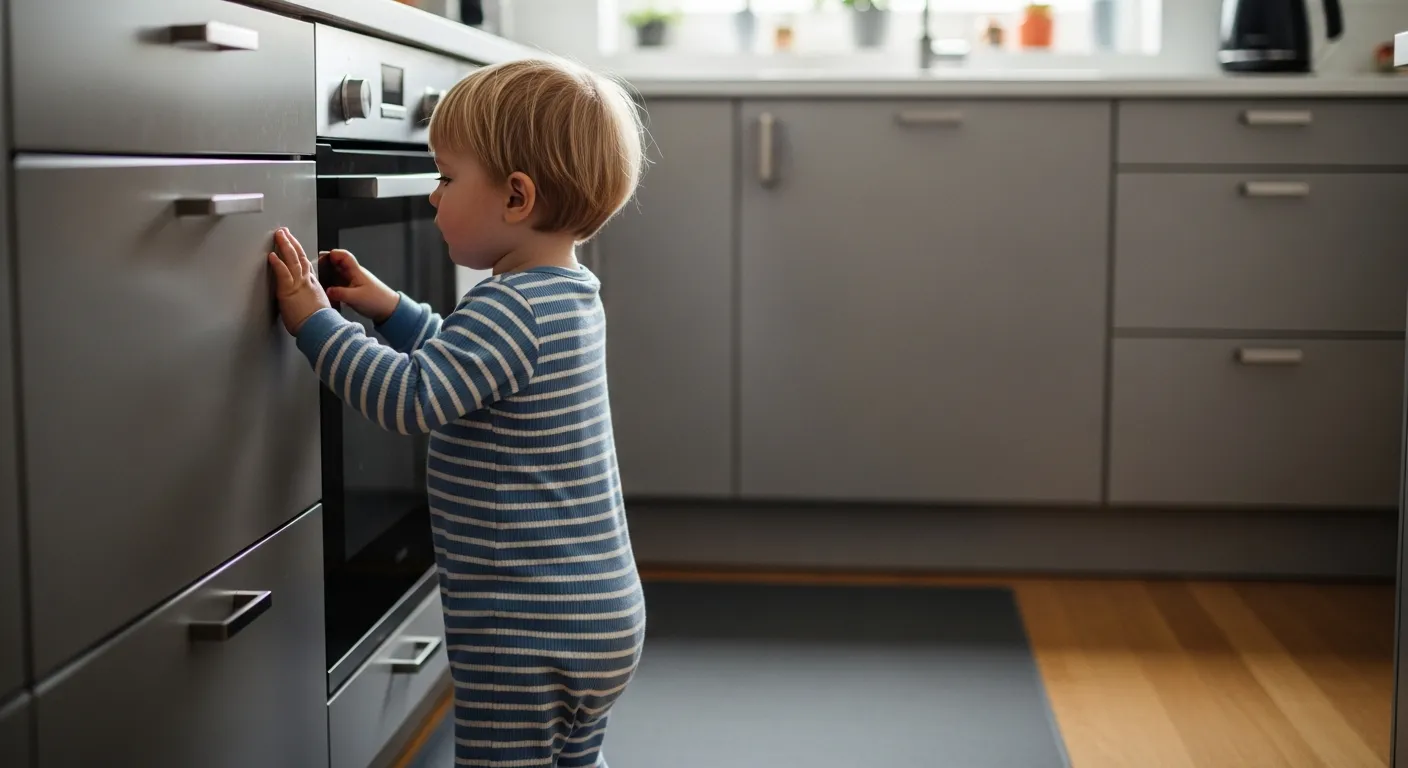
Prevention is the best way to avoid accidental injuries to children. One of the most common places where children get hurt is the kitchen, especially the kitchen cabinets. Here are some ways to childproof kitchen cabinets.
Install Magnetic Locks on the Cabinets
Many companies like “Safety 1st” manufacture magnetic locks that attach to the top inside of the cabinet. The best thing is these locks are not visible from outside to children and can be opened only when the magnetic key is touched to the spot on the door where the lock is fixed. For easy access to keys, you can keep them on the fridge. The other advantage of these locks is that they can be turned off whenever you want and installed in vulnerable places where kids can easily reach. For example, under-sink cabinets, lower cabinets by the stove, and the spice cupboard.
Child Safety Latches
This is an affordable way to childproof cabinets and can be installed easily. These latches can be fixed either using adhesives or with a few screws. The only downside of using screws is that they leave behind screw holes when removed. The latch has a plastic bendable rod with a blunt hook on one side, located on the inside of the cabinet. The functioning is simple- the hook catches on a part of the cabinet door, thus preventing opening.
Conventional Method
A simple, conventional method to childproof cabinets is to wrap a sturdy elastic band around the two adjacent knobs or handles. If the cabinet has a single handle, wrap the elastic band around the handle and hook it securely to the adjacent drawer pull.
Types of Child Safety Cabinet Locks
There are many varieties of child safety cabinet locks. Here is the detailed information:
Sliding Locks
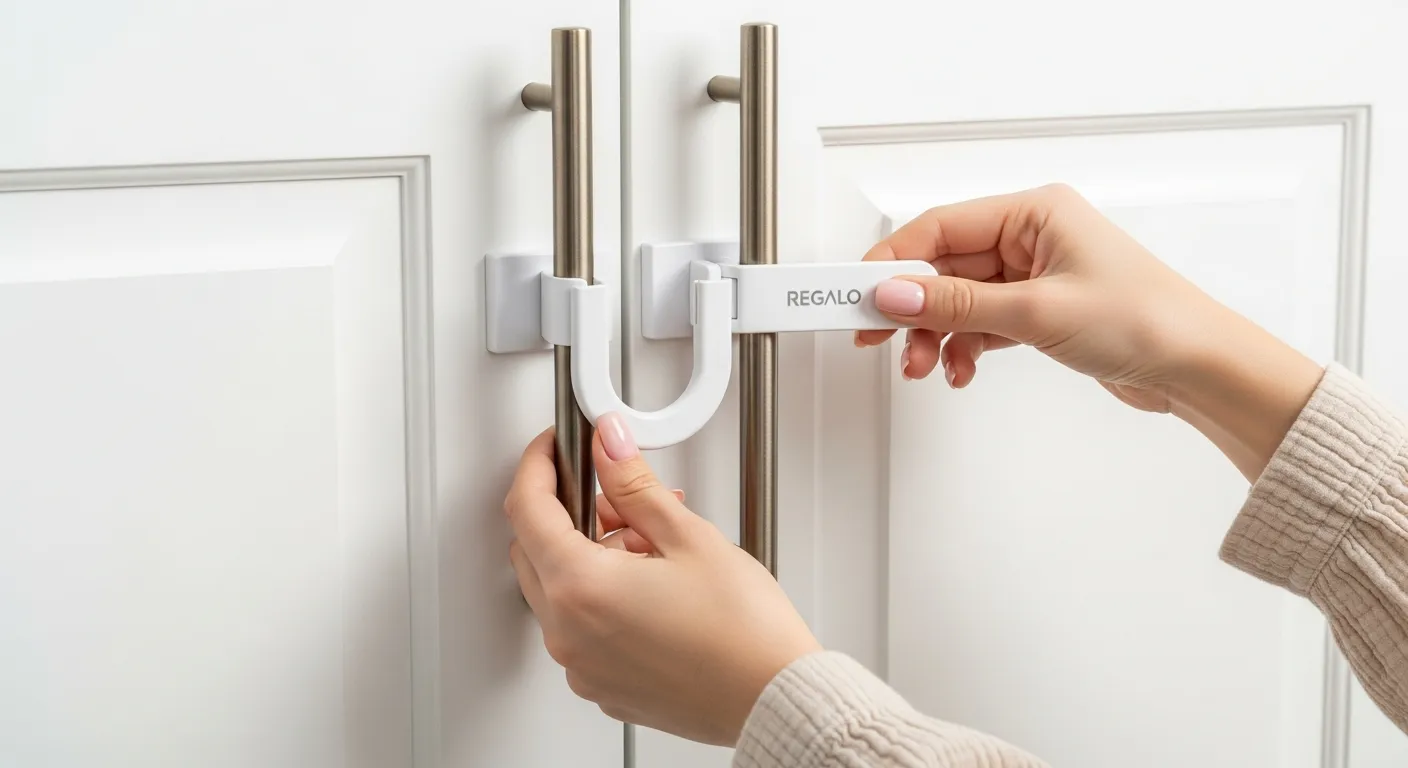
Sliding locks are sturdy, which can prevent tampering by children. The best feature is their compatibility with knobs, handles, and doors up to 5” apart. If it can’t be opened by kids, that doesn't mean it’s complex for adults to open. It provides an easy bypass for adults.
Warparound-style Cabinet Locks
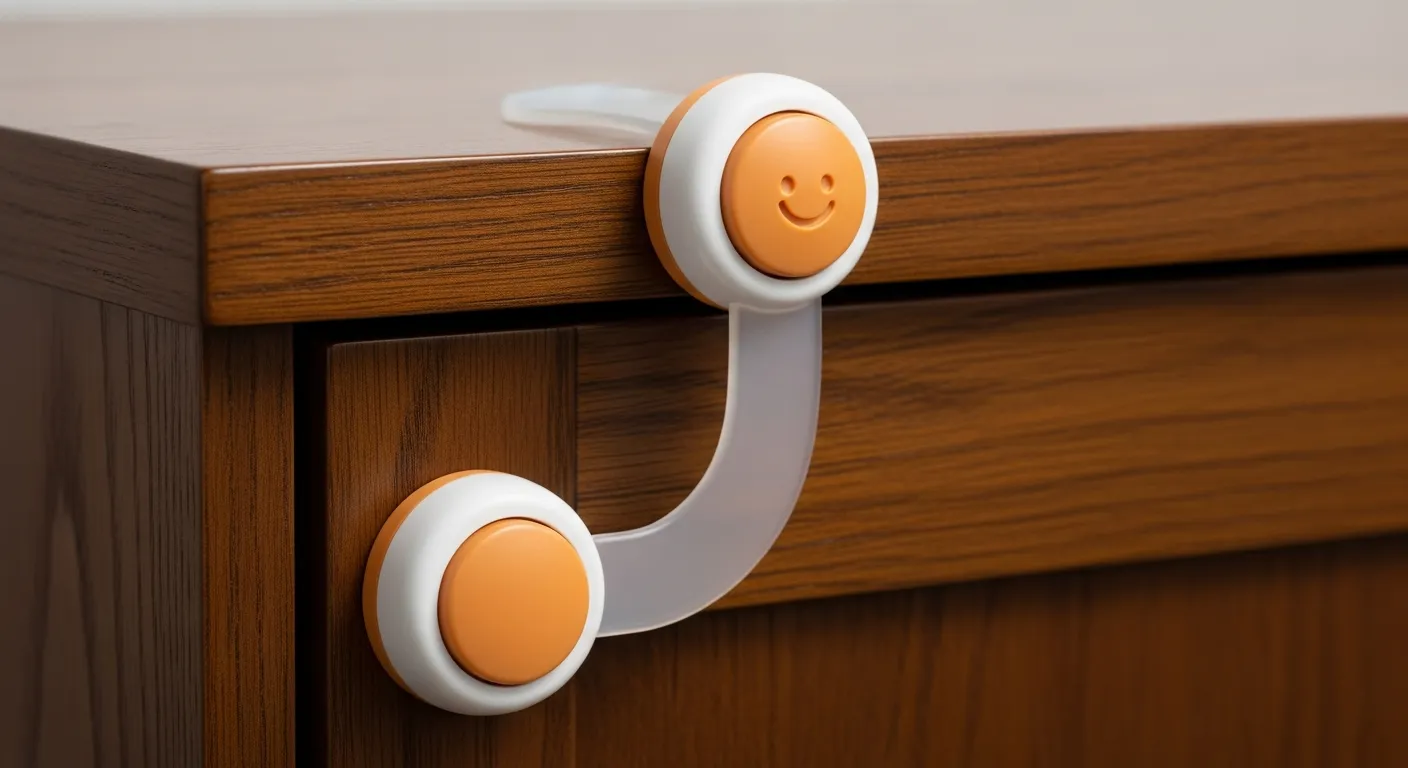
These locks are difficult for children to open but easy for adults to use. Though they don’t look good, they do the work. They work without any modification in the cabinets, but work only for doors with facing handles and knobs. Simply thread each half through one handle or knob and secure them together. It is preferred by homeowners because these locks can be attached and detached without leaving a mark on the cabinet doors.
Magnetic Lock System
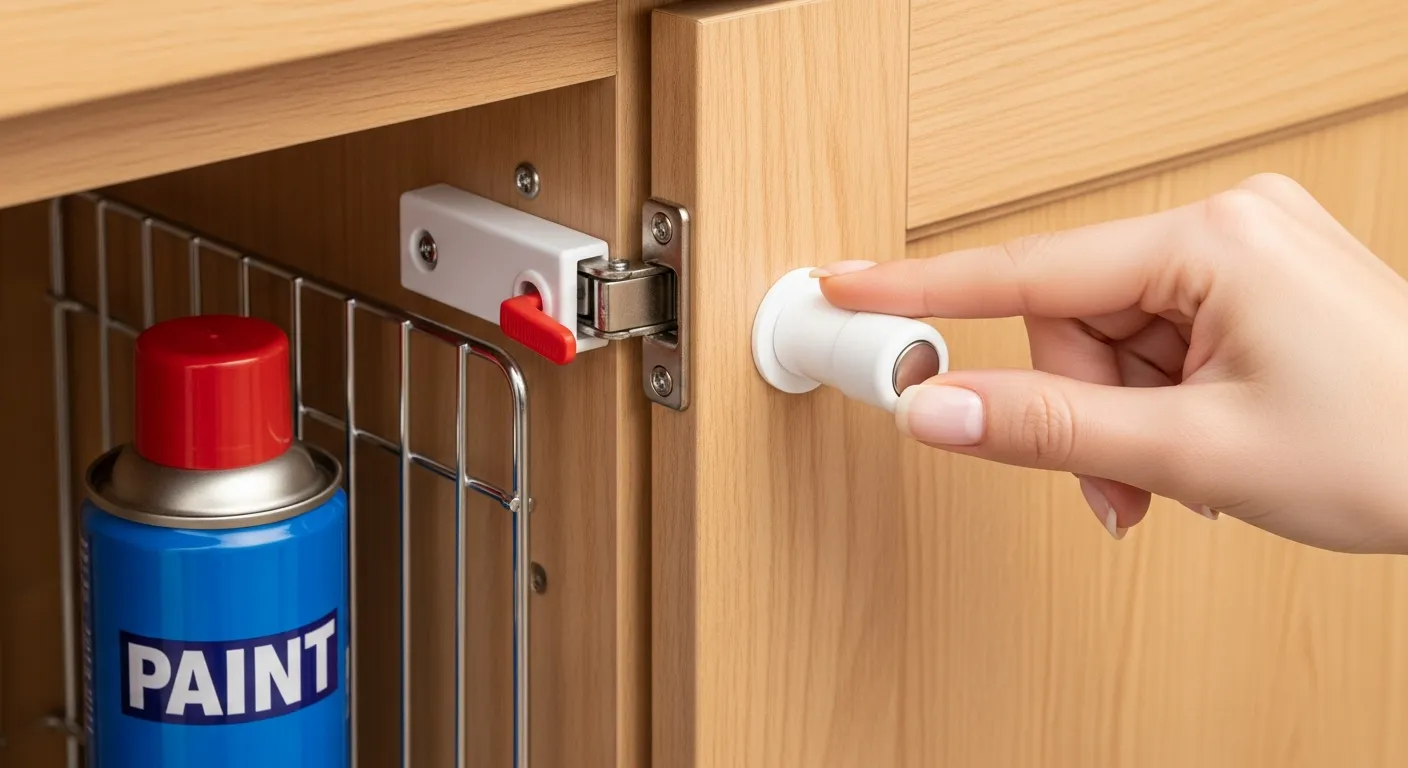
As the name suggests, these locks use magnetic keys to unlock from the outside. These are hidden inside the cabinet, so kids can’t tamper with them. The switch can be flipped to disable the latches, which add to the unique feature, and if you use the cabinets too frequently, there’s no need to unlock them each time.
How to Install Childproof Cabinet Locks Without Damaging Furniture?
Installing the magnetic locks is the easiest way to childproof cabinets, as they don’t require any measurements. Here are the steps to follow:
Step 1: Clean the area properly before attaching the latch. Then, place the latch in the lock in the provided template.
Step 2: Identify the best location on the cabinet for better kid safety. Then, remove the adhesive from the lock and the latch.
Step 3: Now, place the latch along the inside top edge of the cabinet and press firmly. You can use a template to open the cabinet door and check whether it opens properly. Lastly, remove the installation template.
Step 4: The lock is ready to use. You can open the lock using the magnet provided. If you use the cabinet frequently, disable the lock by flipping the switch underneath. It will save the hassle of opening it with a magnet each time you access the cabinet.
| Some Tips | Don’t touch the lock for 24 hrs to ensure adhesives can work best. |
Tips for a Fully Child-Safe Kitchen
A few tips can save the kids from accidental injuries. Here is the list:
- Secure hot surfaces like the stove, oven, and microwave.
- Install safety locks on kitchen cabinets.
- Keep sharp objects, such as knives, away from children.
- Keep hot liquids and foods, such as soup and ramen, out of reach of kids.
- Install stove knob covers and oven locks.
- Secure sharp edges and corners of cabinets.
- Try to replace freestanding shelves with wall-mounted ones.
- Install a child lock on the refrigerator.
- Always put trash cans behind the doors to divert kids' attention.
- Store plastic bags in a hard-to-access place to ensure kids don’t put plastic on their head leading to suffocation.
- All electric outlets should be covered.
Conclusion
Children often reach for kitchen cabinets out of curiosity, which can result in minor accidents. Cabinets are used to store cleaning supplies containing chemicals, which can be dangerous to kids if they access them. There are many ways to childproof kitchen cabinets, such as latches and magnetic locks, as discussed in this blog. Choose the one that suits you the best.